
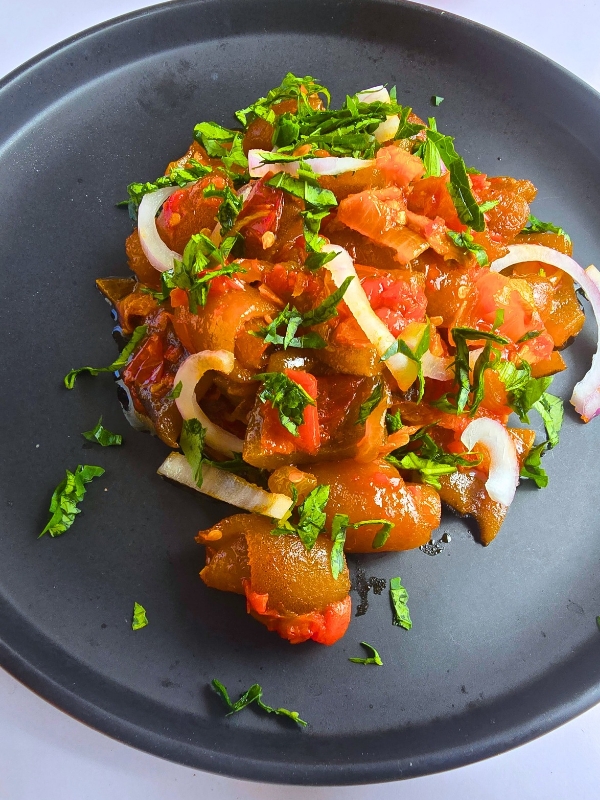
Nigerian Peppered Kpomo Recipe (Nigerian Ponmo / Cow Skin); the best ever.
There are some meals that instantly transport you back to childhood memories, loud family kitchens, roadside food stalls, rainy evenings, and the comforting sound of sizzling pepper sauce on firewood stoves.
In fact, peppered ponmo, also called kpomo, is one of those deeply satisfying Nigerian dishes that carries both flavor and culture in every bite. Beyond its rich taste, this spicy delicacy connects generations through shared memories, family traditions, and comforting home cooking experiences.
If you grew up in Nigeria or have ever visited a bustling Nigerian market, then chances are you have seen giant slabs of cow skin hanging in butcher stalls or simmering in giant pots beside spicy stews.
In many cases, the aroma alone instantly pulls people closer because the spicy scent feels warm, nostalgic, and comforting. At the same time, the sight of sizzling pepper sauce instantly creates excitement among food lovers.
As a result, many people associate peppered ponmo with celebration, comfort, and home-style Nigerian cooking.
For many Africans, especially Nigerians, ponmo is more than food. Instead, it is a nostalgic comfort meal, a street-food favorite, a party delicacy, and sometimes the affordable ingredient that stretches a meal for the entire family.
Furthermore, many households rely on ponmo because it adds texture, richness, and satisfaction to everyday meals without becoming too expensive. Consequently, the dish remains a staple in many Nigerian homes.
Even today, roadside food vendors, local buka restaurants, and family kitchens continue serving it because people genuinely love its spicy flavor and chewy texture.
Why Nigerian Peppered Kpomo Recipe: Nigerian Ponmo Became So Popular
From Budget Food to Global Nigerian Delicacy
Years ago, ponmo was considered “poor man’s meat” in many homes because it was far cheaper than beef, goat meat, turkey, or chicken. However, times have changed dramatically.
Today, many people intentionally buy ponmo not only because it is affordable, but also because they genuinely enjoy the chewy texture and rich peppered flavor.
In fact, it is often served alongside popular Nigerian meals such as:
- party jollof rice
- beans with plantain
- yam porridge
As Nigerian cuisine spreads globally, more people discover it through social media, African restaurants, and food blogs.
From Lagos buka spots to London restaurants and kitchens in Houston, Toronto, and Johannesburg, this dish continues to grow in popularity.
From Lagos buka spots to London African restaurants and Nigerian kitchens in Houston, Toronto, Johannesburg, and Manchester, this spicy cow skin recipe continues to win hearts globally.
As Nigerian cuisine gains more international attention, peppered ponmo continues to stand out as one of the most searched Nigerian street foods online.
What Makes Nigerian Peppered Kpomo Recipe Nigerian Ponmo So Addictive?
The Texture, Flavor, and Heat Combination
One thing that makes peppered ponmo unforgettable is the texture. Not only is it chewy and soft, but it is also creamy, spicy, rich, and deeply flavorful at the same time. Unlike regular meat dishes, ponmo absorbs pepper sauce beautifully.
As a result, every bite delivers heat, smokiness, and deep savory flavor.
In addition, it pairs well with many Nigerian meals such as:
- moi moi
- african salad (abacha)
- native palm oil rice
Because of this versatility, it fits both casual meals and party menus easily.
As a result, every bite delivers heat, smokiness, and savory goodness that keeps people coming back for more. At the same time, the rich palm oil sauce adds a comforting depth that makes the dish feel satisfying and indulgent.
For many Nigerians abroad, eating peppered kpomo feels like home on a plate. Consequently, the dish often becomes a comforting reminder of family gatherings, local buka spots, and late-night street food experiences.
Furthermore, many people love peppered ponmo because it feels both simple and luxurious. Although the ingredients are affordable, the final result tastes deeply flavorful and satisfying. Therefore, the recipe continues to appeal to students, families, party guests, and food lovers worldwide.
What Is Ponmo (Kpomo)?: Nigerian Peppered Kpomo Recipe (Nigerian Ponmo / Cow Skin)
Understanding Nigeria’s Famous Cow Skin Delicacy
Ponmo, also spelled kpomo, pomo, or cow skin meat, is processed cow hide commonly eaten in Nigeria and other parts of West Africa. Typically, the hair is removed from the cow skin through roasting or scraping before the skin is cleaned thoroughly and cooked.
After proper cooking, ponmo develops a chewy yet tender texture that absorbs sauces and spices beautifully. Because of this, peppered ponmo delivers flavor in every single bite.
After cooking, it absorbs sauces very well.
For example, it is often added to soups, stews, and traditional dishes like:
However, peppered ponmo remains the most popular version because of its bold flavor.
While some people enjoy it plain in soups and stews, others prefer it peppered, fried, grilled, or cooked in rich spicy sauces. Most importantly, peppered ponmo is especially popular because the spicy pepper mixture transforms simple cow skin into a deeply flavorful delicacy.
In Nigeria, ponmo appears in several traditional meals. For instance, many people add it to egusi soup, okra soup, pepper soup, and spicy stews. However, peppered ponmo remains one of the most loved versions because the sauce coats the cow skin perfectly.
Where Does Peppered Kpomo (Nigerian Ponmo / Cow Skin) Originate From?
The Yoruba Roots Behind This Popular Dish
Peppered ponmo originates from Nigeria, particularly among the Yoruba people of Southwestern Nigeria, although it is now enjoyed across every region of the country.
Over time, the recipe spread throughout West Africa and eventually gained popularity internationally due to the growing African diaspora in the UK, the United States, Canada, and Europe.
Today, you can find peppered ponmo in:
- Nigerian restaurants in London
- African food spots in New York
- Street food stalls in Lagos
- Nigerian parties and weddings
- African grocery kitchens worldwide
- Home kitchens across the diaspora
Because of social media, its popularity continues to rise.
Additionally, African restaurants abroad now include peppered ponmo on party menus and appetizer platters. Consequently, more non-Africans are becoming interested in Nigerian street food culture.
What Category of Food Does Peppered Kpomo (Nigerian Ponmo / Cow Skin) Fall Under?
Why This Dish Fits Into Multiple Food Categories
Peppered ponmo fits into several food categories, including:
- Nigerian street food
- African comfort food
- Spicy appetizer
- Side dish
- Protein-based delicacy
- Party food
- Low-cost meat alternative
- Traditional Nigerian cuisine
- Afro-fusion snack
- Pepper sauce delicacy
Many people serve it during celebrations, while others eat it as an everyday comfort meal. Therefore, the dish remains popular across different age groups and social settings.
In addition, peppered ponmo works perfectly as both a snack and a complete meal. Depending on the portion size, people can enjoy it alone or pair it with rice, yam, noodles, or bread.
When Is Nigerian Peppered Kpomo (Nigerian Ponmo / Cow Skin) Commonly Eaten?
A Dish Perfect for Everyday Meals and Celebrations
One of the reasons peppered ponmo is so loved is because it works for almost every occasion.
People enjoy it:
People enjoy it:
- With drinks like zobo drink
- With rice or yam dishes
- During rainy evenings
- At Nigerian parties
- During family gatherings
- As a late-night snack
- During football viewing nights
- At roadside buka restaurants
- As a side dish with rice
- During festive celebrations
- As comfort food during rainy weather
- As a quick spicy appetizer
It is truly a “anytime food.”
Some Nigerians even enjoy peppered ponmo with garri and cold water, especially during tight-budget periods. Meanwhile, others prefer pairing it with rice, yam, or chilled drinks during parties and social gatherings.
Because the recipe is flexible, people can prepare it for both casual meals and special occasions. Therefore, peppered ponmo continues to remain relevant in Nigerian food culture.
What to Eat With Nigerian Peppered Kpomo (Nigerian Ponmo)
Peppered ponmo pairs perfectly with:
- Party Jollof Rice
- Beans with Plantain
- Yam Porridge
- Moi Moi
- Native Palm Oil Rice
- African Salad (abacha)
- Ukwa
- Akidi
- Zobo drink
Nigerian Peppered Kpomo Recipe (Nigerian Ponmo / Cow Skin).
Equipment
- 1 Blender or grater. for the pepper and tomatoes
Ingredients
- 2.2 pounds fresh cow skin The main ingredient; becomes soft and chewy when properly boiled and absorbs the pepper sauce beautifully.
- 4 whole medium fresh tomatoes Adds natural sweetness, moisture, and balances the heat in the pepper sauce.
- 1 whole large onion Builds flavor depth and adds a sweet, aromatic base to the sauce.
- 8 whole fresh red peppers Provides the signature heat and bold Nigerian spicy flavor.
- 1 tablespoon salt Balances all flavors and brings out the natural taste of the ingredients.
- 4 tablespoons red palm oil Gives the dish its authentic Nigerian taste, rich color, and smooth texture.
- 1 whole small piece fresh ginger Adds warmth, aroma, and a slight spicy kick that enhances overall flavor.
- 2 whole small garlic cloves Boosts savory depth and gives the sauce a richer taste profile.
- 1 whole handful utazi leaves Adds a slight bitter contrast that balances the richness of the sauce (optional garnish).
- 1 tablespoon crushed stock cube seasoning Enhances umami flavor and ties all ingredients together.
- 1/2 cup water. Helps soften the ponmo and prevents the sauce from burning while cooking.
Instructions
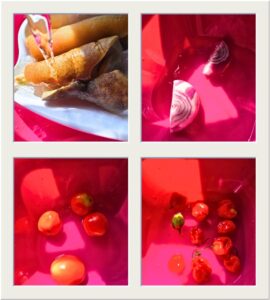
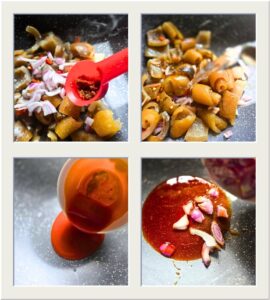
- Step 1: Prepare the Ingredients: First, wash and grate the fresh peppers. Next, dice the tomatoes, onions, and utazi leaves.Afterward, wash and dice the cow skin into bite-sized pieces. Preparing everything ahead makes cooking smoother and faster. Additionally, organized preparation prevents burning or overcooking.

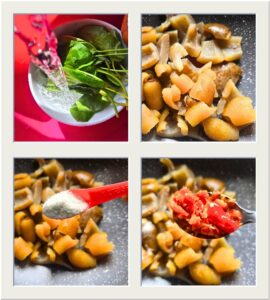
- Step 2: Season the Ponmo: Place the diced cow skin into a clean cooking pot. Then add: Half of the diced onions. Some grated pepper; Salt; Some crushed stock cubes; Half cup of water. Mix everything properly. At this stage, the ponmo begins absorbing flavor before entering the sauce. Consequently, the final taste becomes deeper and richer.
- Step 3: Cook the Ponmo: Next, cover the pot and cook for about 10 minutes. During this period, the ponmo gradually softens while releasing moisture. As a result, the mixture becomes naturally saucy. However, avoid overcooking because excessively cooked ponmo can become too rubbery.
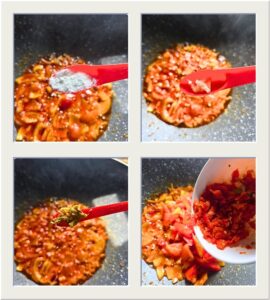
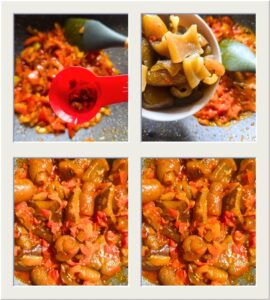
- Step 4: Prepare the Pepper Sauce: Place a clean frying pan on medium heat. Add the palm oil. Once slightly hot, add the remaining diced onions and fry lightly until fragrant. Then add:; Ginger; Garlic; Tomatoes; Remaining peppers. Remaining crushed stock cubes. Stir continuously while allowing the mixture to fry properly.
- Step 5: Combine the Ponmo and Sauce: Afterward, add the cooked ponmo into the pepper sauce. Mix thoroughly so every piece becomes fully coated. Then steam for another 5 minutes. This stage is extremely important because it allows the ponmo to absorb the spicy tomato sauce completely. Consequently, every bite becomes flavorful and satisfying.
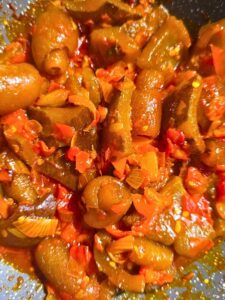
- Step 6: Garnish and Serve: Finally, dish the peppered ponmo into a serving plate. Garnish with: Fresh diced onions; Fresh utazi leaves; Serve while hot, creamy, spicy, and fresh. For the best experience, enjoy immediately while the sauce remains rich and aromatic.

Notes
Adjust Scotch bonnet peppers based on your spice preference.
Palm oil gives the dish its authentic Nigerian flavor—do not skip it.
Do not overcook after adding ponmo to the sauce to avoid a rubbery texture.
Best enjoyed hot and fresh, but flavors deepen when it sits for a few hours.
Can be paired with rice, yam, plantain, beans, or eaten as a standalone snack.
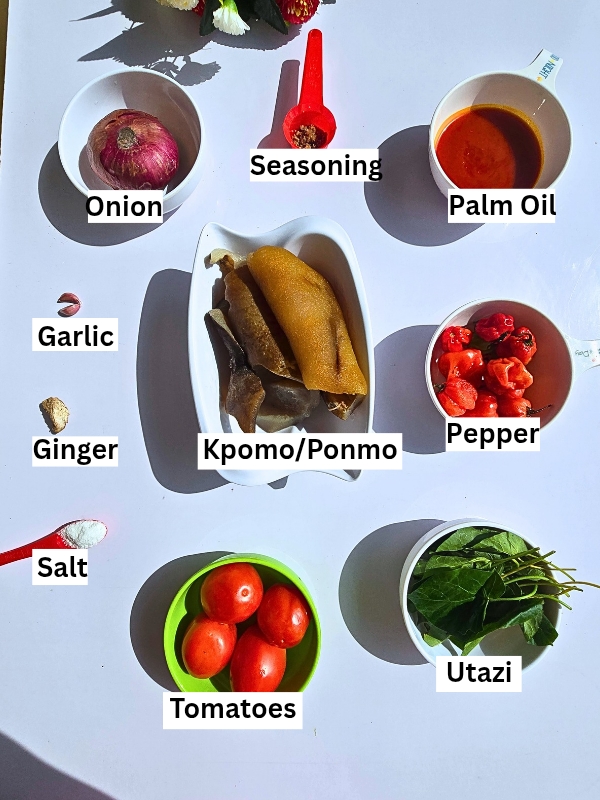
Ingredients for Nigerian Peppered Kpomo/ Ponmo
_
Main Ingredients
- 2.2 pounds fresh cow skin (ponmo/kpomo), washed and diced
- 4 medium fresh tomatoes, diced
- 1 large onion, divided and diced
- 8 fresh red peppers (Scotch bonnet or red chili peppers)
- 1 tablespoon salt
- 4 tablespoons red palm oil
- 1 small piece fresh ginger, grated
- 2 small garlic spice
- 1 handful utazi leaves, sliced for garnish
- 1 tablespoon crushed stock cube seasoning
- 1/2 cup water
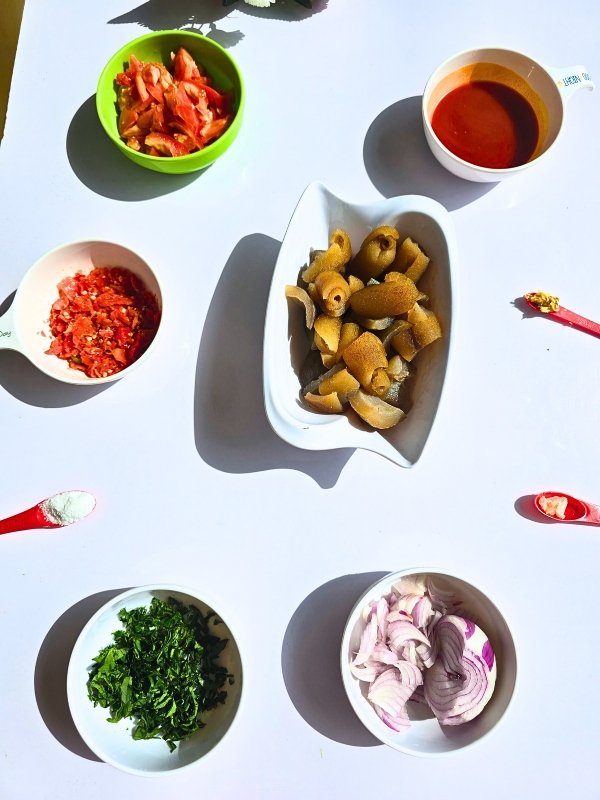
Ingredient Breakdown on Nigerian Peppered Kpomo Recipe Nigerian Ponmo and Why Each Ingredient Matters
The Secret Behind the Rich Flavor Of Nigerian Peppered Kpomo Recipe Nigerian Ponmo
Cow Skin (Ponmo)
Cow skin is the heart of this recipe. Not only does it absorb flavor exceptionally well, but it also delivers the signature chewy texture people love.
Tomatoes
Fresh tomatoes add sweetness, acidity, moisture, and richness to the sauce. In turn, they help balance the heat from the peppers.
Red Peppers
This is where the bold heat comes from. Scotch bonnet peppers create authentic Nigerian flavor while also making the sauce vibrant and spicy.
Onion
Onions deepen the flavor and add natural sweetness. Additionally, they improve the aroma of the sauce.
Palm Oil
Palm oil gives the recipe its traditional Nigerian taste and beautiful color. Without it, the dish loses part of its authentic flavor.
Ginger and Garlic
Ginger adds warmth and slight heat, while Garlic contribute earthy depth and aroma. Together, they make the sauce richer and more layered.
Utazi Leaves
Utazi leaves add slight bitterness that balances the richness of the sauce beautifully.
Kitchen Tools You Need For Nigerian Peppered Kpomo Recipe (Nigerian Ponmo / Cow Skin)
Basic Cooking Equipment for Beginners
Fortunately, you do not need fancy equipment to prepare peppered ponmo. Instead, simple kitchen tools are enough.
You will need:
- Sharp knife
- Cutting board
- Cooking pot
- Frying pan
- Wooden spoon
- Blender or grater
- Serving plate
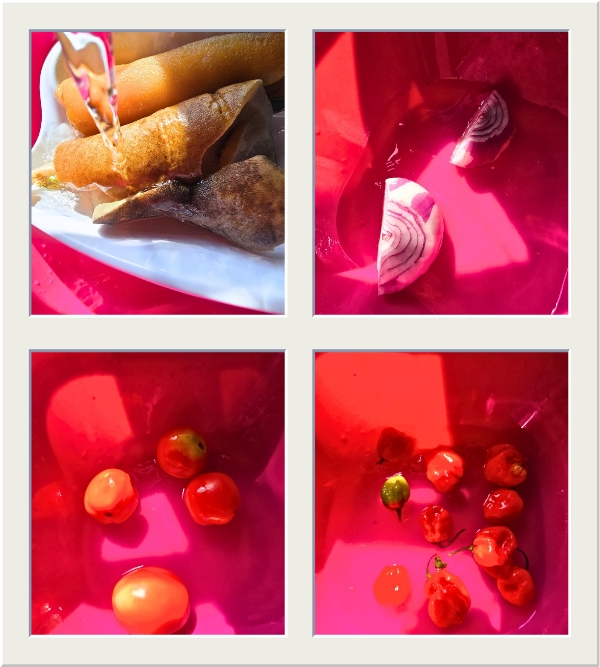
How to Clean Ponmo Properly
Why Proper Cleaning Is Extremely Important
Cleaning cow skin properly is one of the most important parts of this recipe. If ponmo is not cleaned well, the final dish may taste smoky or unpleasant.
Step 1: Rinse Thoroughly
Wash the cow skin several times under running water.
Step 2: Scrape Burnt Areas
Some ponmo still contains burnt particles from processing. Therefore, gently scrape those areas with a knife.
Step 3: Dice Into Small Pieces
Cut the ponmo into medium bite-sized chunks for easier cooking.
Step 4: Rinse Again
After dicing, rinse one more time to remove loose particles.
As a result, the final dish tastes cleaner, fresher, and more flavorful.
Step-by-Step Guide: How to Make Peppered Ponmo: Easy Cooking Instructions for Beginners
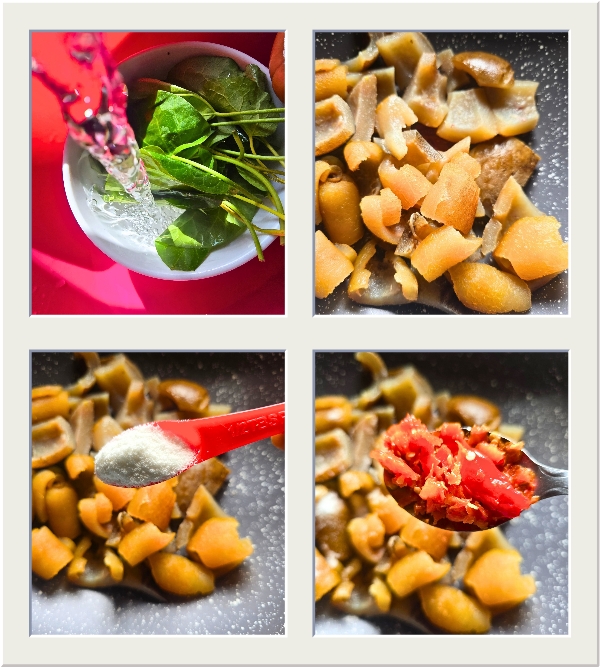
Step 1: Prepare the Ingredients
First, wash and grate the fresh peppers.
Next, dice the tomatoes, onions, and utazi leaves.
Afterward, wash and dice the cow skin into bite-sized pieces.
Preparing everything ahead makes cooking smoother and faster. Additionally, organized preparation prevents burning or overcooking.
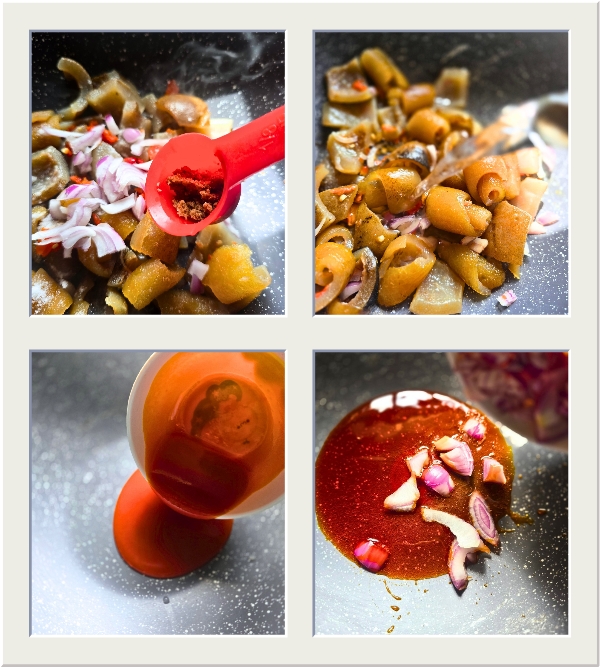
Step 2: Season the Ponmo
Place the diced cow skin into a clean cooking pot.
Then add:
- Half of the diced onions
- Some grated pepper
- Salt
- Some crushed stock cubes
- Half cup of water
Mix everything properly.
At this stage, the ponmo begins absorbing flavor before entering the sauce. Consequently, the final taste becomes deeper and richer.
Step 3: Cook the Ponmo
Next, cover the pot and cook for about 10 minutes.
During this period, the ponmo gradually softens while releasing moisture. As a result, the mixture becomes naturally saucy.
However, avoid overcooking because excessively cooked ponmo can become too rubbery.
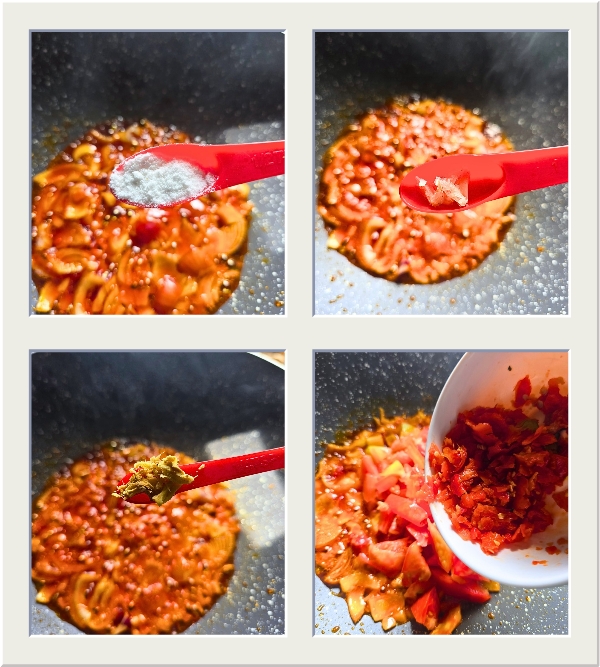
Step 4: Prepare the Pepper Sauce
Place a clean frying pan on medium heat.
Add the palm oil.
Once slightly hot, add the remaining diced onions and fry lightly until fragrant.
Then add:
- Ginger
- Cloves
- Tomatoes
- Remaining peppers
- Remaining crushed stock cubes
Stir continuously while allowing the mixture to fry properly.
Meanwhile, the tomatoes and peppers gradually combine into a creamy, spicy sauce. As the mixture thickens, the aroma becomes richer and more intense.
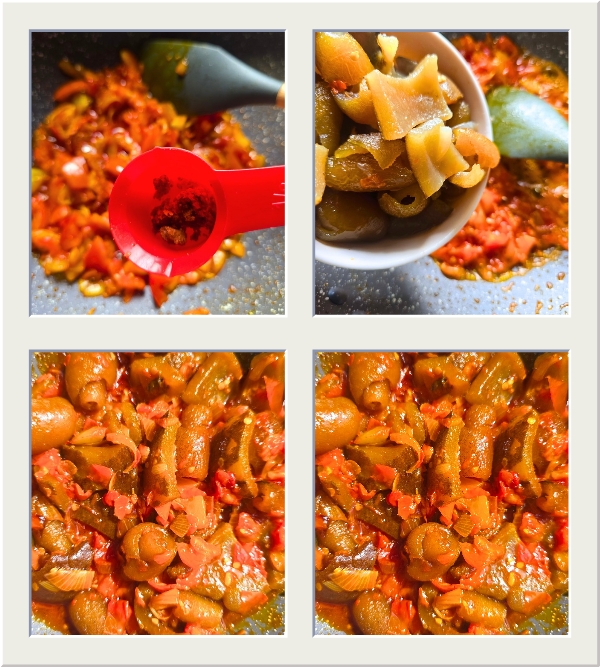
Step 5: Combine the Ponmo and Sauce
Afterward, add the cooked ponmo into the pepper sauce.
Mix thoroughly so every piece becomes fully coated.
Then steam for another 5 minutes.
This stage is extremely important because it allows the ponmo to absorb the spicy tomato sauce completely. Consequently, every bite becomes flavorful and satisfying.
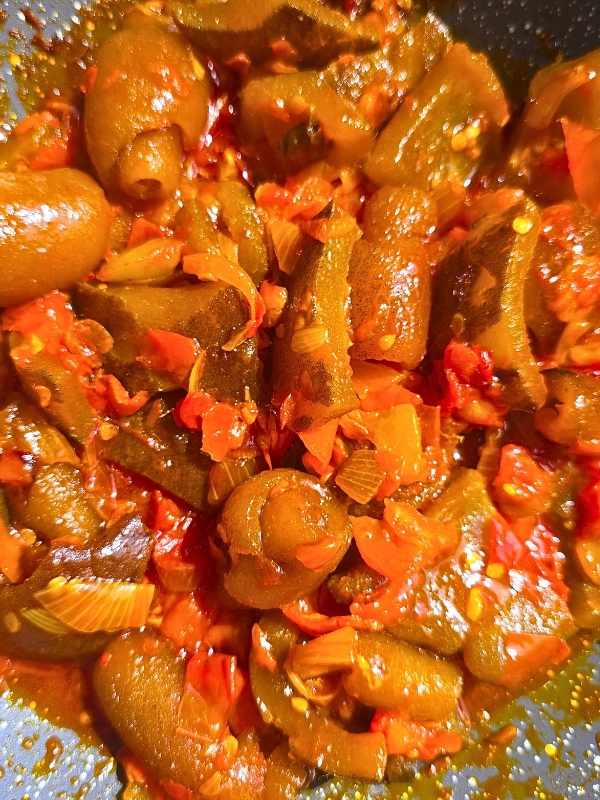
Step 6: Garnish and Serve
Finally, dish the peppered ponmo into a serving plate.
Garnish with:
- Fresh diced onions
- Fresh utazi leaves
Serve while hot, creamy, spicy, and fresh. For the best experience, enjoy immediately while the sauce remains rich and aromatic.
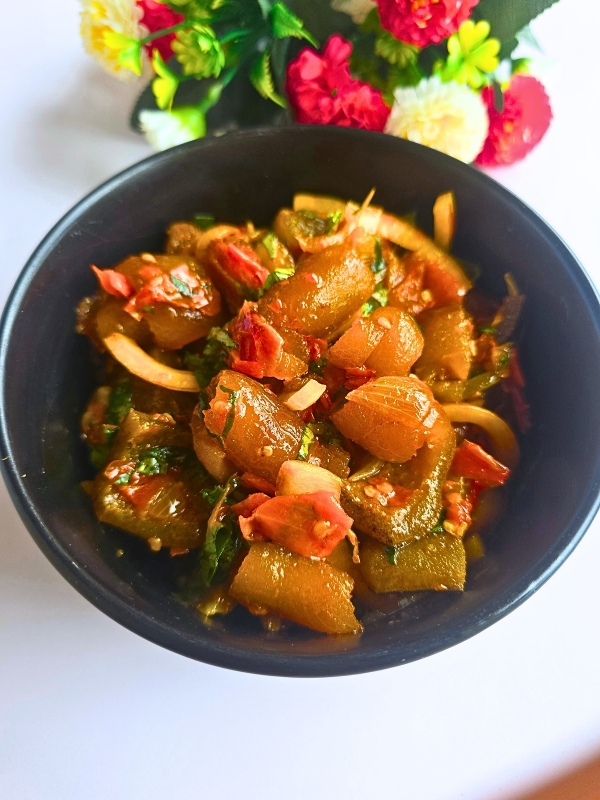
Best Side Dishes for Nigerian Peppered Kpomo Recipe (Nigerian)
Delicious Foods That Pair Perfectly With Kpomo
Without a doubt, peppered ponmo is incredibly versatile.
You can serve it with:
- White rice
- Jollof rice
- Fried plantain
- Boiled yam
- Garri
- Bread
- Noodles
Also, some people pair it with pasta, potatoes, or even roasted plantain. Because the sauce is rich and flavorful, it blends well with many different side dishes.
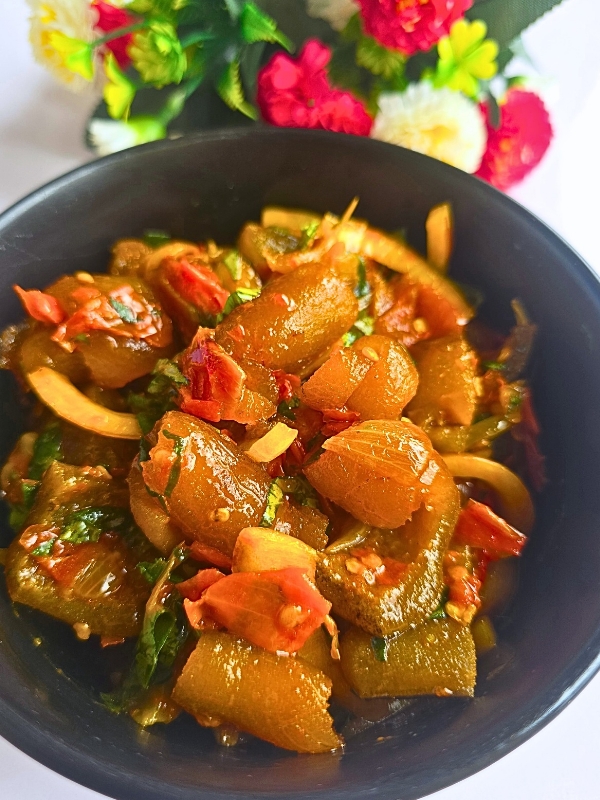
Common Mistakes People Make When Cooking Nigerian Ponmo
Cooking Errors That Can Ruin the Final Dish
Although peppered ponmo is relatively easy to prepare, certain mistakes can affect the final result.
Not Cleaning the Ponmo Properly
Poor cleaning can leave smoky residue.
Using Too Much Water
Too much water creates watery sauce instead of rich creamy flavor.
Overcooking the Ponmo
Cooking too long can make the texture unpleasantly rubbery.
Not Frying the Sauce Properly
Under-fried tomato sauce tastes raw and acidic.
Adding Excess Salt
Since stock cubes already contain salt, adding too much can overpower the dish.
Is Nigerian Peppered Kpomo (Nigerian Ponmo / Cow Skin) Healthy?
What You Should Know Before Eating Ponmo
Ponmo is primarily collagen-rich cow skin. Although it contains less protein than beef, many people enjoy it for its texture and satisfying chewiness.
To make the dish healthier:
- Use moderate oil
- Add more vegetables
- Reduce seasoning cubes
- Pair with balanced meals
Like many comfort foods, moderation is important. Nevertheless, peppered ponmo can still fit into balanced meals when eaten responsibly.
How to Store Leftover Nigerian Peppered Ponmo (Nigerian)
The Best Ways to Keep It Fresh
Interestingly, peppered ponmo stores very well. In fact, some people believe the flavor becomes even richer after refrigeration.
Refrigerator Storage
Store in an airtight container for up to 4 days.
Freezer Storage
Freeze for up to 2 months.
Reheating Tips
Reheat gently with a small splash of water. However, avoid overheating because the ponmo may toughen.
Why People Around the World Love Nigerian Peppered Kpomo/Ponmo (Nigerian)
The Global Rise of Nigerian Street Food
African cuisine is becoming increasingly popular worldwide. Consequently, more people are searching for authentic Nigerian recipes online.
Peppered ponmo appeals globally because:
- It is affordable
- It is flavorful
- It is culturally rich
- It is spicy and comforting
- It introduces authentic Nigerian cuisine
- It works as party food and comfort food
As food lovers continue exploring African cuisine, peppered ponmo remains one of the most exciting Nigerian dishes to try.
Furthermore, global audiences now appreciate Nigerian food because of its bold spices, vibrant colors, and comforting flavors. Therefore, recipes like peppered ponmo continue attracting international attention.
Frequently Asked Questions on Nigerian Peppered Kpomo Recipe (Nigerian Ponmo / Cow Skin)
1. What are the ingredients in peppered ponmo?
Peppered ponmo is made using simple but flavorful ingredients including cow skin (Ponmo), fresh peppers, tomatoes, onions, palm oil, ginger, garlic, seasoning cubes, salt, and utazi leaves. These ingredients combine to create a rich, spicy Nigerian pepper sauce that fully coats the ponmo.
2. What is ponmo called in English?
Ponmo is called cow skin or beef skin in English. It is the cleaned and processed outer skin of a cow that becomes soft and chewy after boiling and cooking.
3. Do they fry ponmo?
Yes, ponmo can be fried, but it depends on the recipe.
- For peppered ponmo: it is usually boiled and cooked in pepper sauce
- Some variations lightly fry it after boiling for extra texture
- It can also be used directly in soups or stews without frying
So frying is optional, not required.
4. How to prepare kpomo and periwinkle?
To prepare kpomo and periwinkle:
- Clean and boil kpomo until soft
- Wash periwinkle thoroughly to remove sand
- Prepare a pepper sauce base with onions, tomatoes, peppers, and palm oil
- Add kpomo first and simmer
- Add periwinkle last and cook briefly
- Mix and allow flavors to combine
This creates a rich coastal-style Nigerian dish with mixed textures.
5. What is peppered ponmo recipe?
Peppered ponmo is a spicy Nigerian dish made by boiling cow skin, then cooking it in a rich pepper sauce made with tomatoes, onions, red peppers, palm oil, and spices. It is simmered until the sauce coats every piece of ponmo, creating a bold, flavorful street food dish.
See full step-by-step method in the main “Peppered Ponmo Recipe” section above.
6. What is peppered ponmo sauce recipe?
Peppered ponmo sauce is made by:
- Blending peppers, tomatoes, and onions
- Frying in palm oil until thick
- Adding seasoning, ginger, and garlic
- Cooking until oil rises to the top
This sauce is the base for ponmo, meat, or fish dishes.
7. What is Nigerian peppered ponmo recipe?
The Nigerian version uses:
- Scotch bonnet peppers for heat
- Palm oil for authentic flavor
- Onion and tomato base
- Optional utazi leaf garnish
It is commonly served in bukas, parties, and street food stalls across Nigeria.
8. What is kpomo stew?
Kpomo stew is a thicker, milder version of peppered ponmo sauce. It is usually:
- Less spicy
- More tomato-based
- Cooked with extra liquid
- Served with rice, yam, or plantain
Pairs well with party jollof rice and native palm oil rice.
9. What is kpomo sauce recipe?
Kpomo sauce is a spicy Nigerian pepper base made from:
- Blended peppers, onions, tomatoes
- Palm oil
- Seasoning cubes
- Ginger and garlic
It is used for ponmo, meat, fish, and mixed stews.
10. How to cook kpomo soft?
To make kpomo soft:
- Boil it for 10–20 minutes before cooking
- Use smaller cuts for faster softening
- Simmer gently instead of hard boiling
- Use pressure cooking if available
- Avoid overcooking after adding sauce
Proper boiling is the key to soft texture.
11. How to make peppered meat?
Peppered meat follows the same method as ponmo:
- Boil meat until tender
- Prepare pepper sauce with palm oil, onions, tomatoes, and peppers
- Fry sauce until thick
- Add meat and simmer
- Mix until fully coated
It is often served at Nigerian parties with rice or Plantain.
Conclusion on Nigerian Peppered Kpomo Recipe (Nigerian Ponmo / Cow Skin)
A Nigerian Comfort Food Worth Exploring
Generally, peppered ponmo is more than just spicy cow skin. Instead, it represents comfort, culture, affordability, flavor, and Nigerian food tradition in one unforgettable dish.
In many ways, it combines nostalgia, creativity, affordability, and bold African flavor into a meal people genuinely crave repeatedly. Therefore, it continues to attract both Nigerians and curious food lovers around the world.
This recipe proves that simple ingredients can create something deeply satisfying and globally appealing. More importantly, it highlights the beauty and richness of authentic Nigerian cooking traditions.
Whether you are Nigerian, African, Caribbean, British, American, or simply a curious food lover searching for authentic international cuisine, peppered ponmo offers an exciting culinary experience worth trying.
The creamy spicy sauce, rich palm oil aroma, fresh peppers, and chewy texture create a meal that feels both comforting and adventurous at the same time.
Most importantly, this recipe celebrates the beauty of African cooking traditions and the ability of food to connect people across cultures.
So, the next time you crave something bold, spicy, rich, affordable, and deeply satisfying, make a plate of hot peppered ponmo.
One bite might completely change how you see Nigerian food forever.

Authentic Dish.