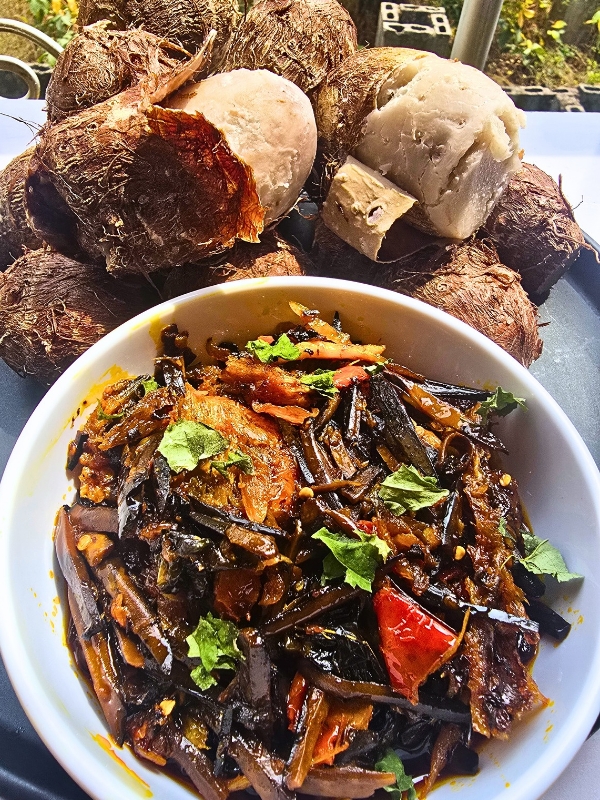
This is Cocoyam with Traditional Sauce Recipe You will Love.
I grew up knowing this dish as the kind of food you eat when you want calm. There’s no rush, and there’s no ceremony. Instead, cocoyam, palm oil, and pepper come together as familiar smells slowly fill the kitchen and settle the moment.
Cocoyam with traditional palm oil sauce is one of those Nigerian meals that looks humble yet tastes deeply satisfying. Even though it isn’t flashy and avoids complicated techniques, families have cooked it for generations.
Today, as more people in the US and UK explore traditional, plant-forward foods, this simple dish is once again attracting new fans. Quick and Easy Vegetable Sauce Recipe can be used to eat this cocoyam too
Why This Cocoyam with Traditional Sauce Still Matters Today
In many Nigerian homes, people cook cocoyam and palm oil sauce because they want something real and grounding. For instance, families often eat it after a long day, during quiet evenings, or whenever heavy meals feel unnecessary.
What makes this dish special isn’t the technique; rather, it’s the intention. Cooks choose natural ingredients, keep processing minimal, and take their time. As a result, in a world dominated by fast food and constant speed, this meal creates a moment of pause.
What Is Cocoyam with Traditional Palm Oil Sauce?
Cocoyam, known globally as taro root, is a starchy tuber that cooks until soft and tender. Then, cooks serve it with a red palm oil–based sauce. Typically, the sauce is prepared with peppers, onions, fermented oil bean (ugba), utazi leaves (Gongronema latifolium), and warming spices.
Food Category:
-
Traditional African cuisine
-
Comfort food
-
Naturally gluten-free
-
Plant-forward (fish optional)
Why People Love Cocoyam with Traditional Sauce
People love this dish for several reasons. First, it delivers deep flavor without complexity. In addition, it relies on only a few natural ingredients. Although it fills you up, it never feels heavy.
Moreover, the recipe avoids seasoning cubes, which allows each ingredient to stand out. The pepper adds heat, the utazi brings gentle bitterness, and together they create a balanced, comforting meal. Overall, this is the kind of food that naturally slows you down.

Cocoyam with Traditional Sauce.
Equipment
- 1 Pot and pan for boiling the cocoyam and making the sauce
Ingredients
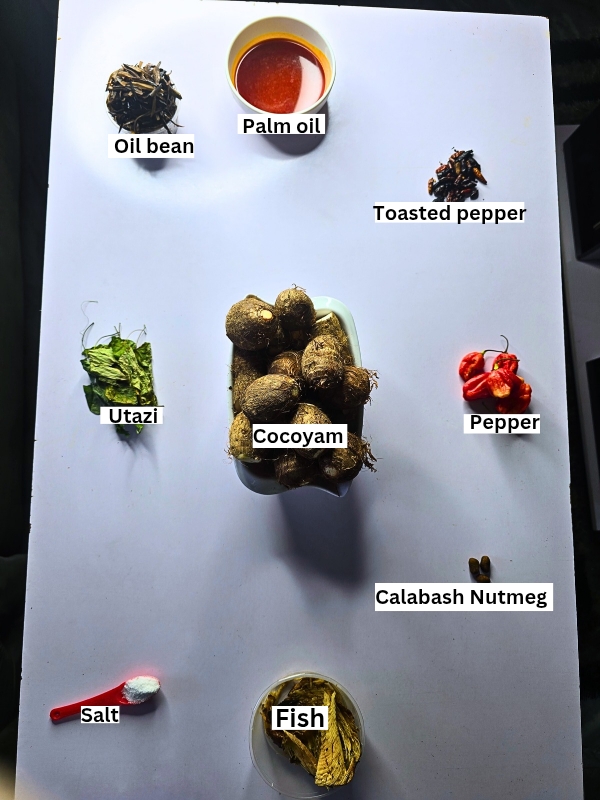
- 15 whole cocoyam corms Choose firm, unblemished corms with no soft spots. Fresh cocoyam boils faster and peels more easily than older ones. Always peel while still warm for the smoothest results.
- 4 cups Water. Use clean water just enough to fully submerge the cocoyam. Too much water does not affect the cocoyam but too little will cause uneven cooking.
- ¼ cup unbleached red palm oil Use deep red, unbleached palm oil for the richest colour and authentic flavour. Never bleach it; warm it gently on medium heat just until it loosens and flows freely.
- 2 bulb medium onions Mash or blend the onions rather than chopping them. Mashed onions dissolve into the sauce beautifully, giving it a smoother, more cohesive texture and deeper flavour.
- 5 whole fresh red peppers Scotch bonnet or tatashe both work well here. Mash rather than blend for a more rustic, traditional texture. Adjust the quantity to suit your heat preference.
- 1 tablespoon dried pepper This adds a deeper, smokier heat than fresh pepper alone. Start with 1 tablespoon and adjust to taste; it is easier to add more than to fix an overly spicy sauce.
- 1 teaspoon salt Add salt gradually and taste as you go. If you are using smoked or dried fish, reduce the salt slightly as the fish already carries its own saltiness.
- 1 cup fermented oil bean Rinse lightly before adding if you prefer a milder flavour. Ugba adds a bold, tangy depth that is the heart of this traditional sauce — do not skip it.
- 1 handful utazi leaves Slice very thinly for best results. Utazi is naturally bitter, so use just enough to balance the richness of the palm oil without overpowering the other flavours. Add at the very end to preserve its colour and freshness.
- 3 whole calabash nutmeg This is the ingredient that gives this dish its unmistakably traditional aroma. Grind fresh just before adding for the strongest flavour. Do not substitute with regular nutmeg; the flavour profile is completely different.
- 100 g dried fish Wash thoroughly before adding to remove excess salt and any impurities. Debone carefully to avoid bones in the sauce. The fish adds a lovely smoky depth that elevates the entire dish; highly recommended even though it is optional
Instructions
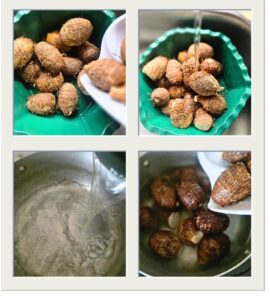
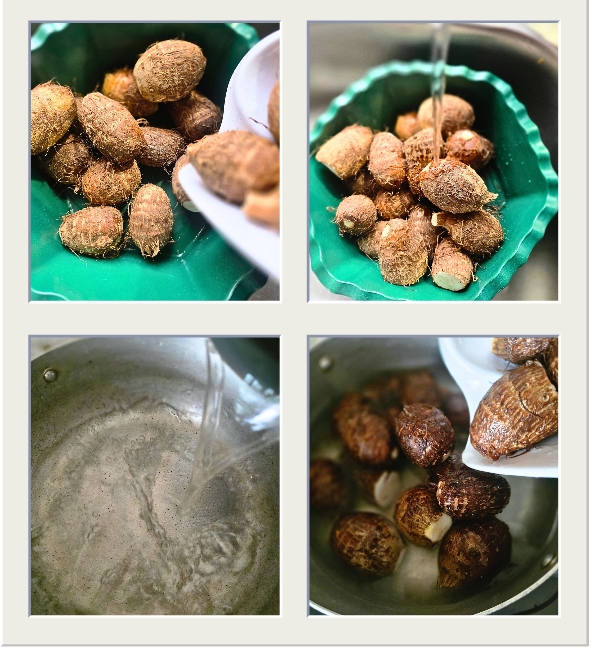
- Step 1: Boil the Cocoyam: First, wash the cocoyam thoroughly to remove dirt. Then, place it in a pot and cover it with clean water. Boil for 25–30 minutes until tender, and afterwards, drain and peel while still warm.
- Step 2: Make the Palm Oil Sauce: Meanwhile, place a clean pot on medium heat and pour in the palm oil. Allow it to warm gently, making sure it doesn’t bleach. Next, add the salt, mashed onions, mashed fresh peppers, and dried pepper. Stir and cook for 5–7 minutes.
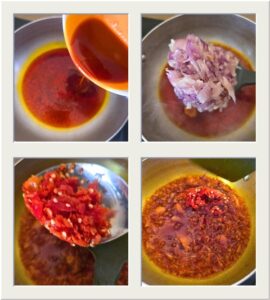
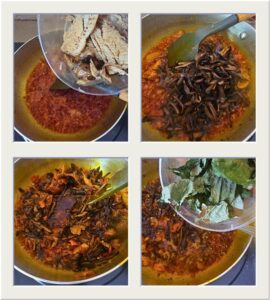
- Step 3: After that, add the washed fish (if using) and the fermented oil bean, then cook another 5 minutes. Finally, stir in the utazi leaves and ground calabash nutmeg. Heat for 2–3 minutes and remove the pot from heat. Serve the sauce in a small bowl alongside the boiled cocoyam.
Notes
Do not bleach the palm oil. Warm it gently on medium heat just until it loosens. Bleached palm oil loses both its nutritional value and its rich traditional flavor.
Ugba (fermented oil bean) can be strong in flavor; rinse it lightly before adding if you prefer a milder taste.
Utazi leaves are naturally bitter. Use just enough to balance the richness of the sauce without overpowering it. Slice them very thinly for best results.
Calabash nutmeg gives this dish its distinctive traditional aroma; do not skip it. It is what separates this sauce from a regular pepper sauce.
The fish is optional but highly recommended; it adds a lovely smoky depth to the sauce.
Serve immediately while the cocoyam is still warm for the best experience.
Ingredients and Exact Measurements for Cocoyam with Traditional Sauce
Boiled Cocoyam
-
15 medium cocoyam corms (about 1.5 kg / 3.3 lb)
-
Water, enough to cover
Traditional Palm Oil Sauce
-
¼ cup unbleached red palm oil
-
2 medium onions, mashed
-
5 fresh red peppers, mashed
-
1 tablespoon dried pepper (adjust to taste)
-
1 teaspoon salt
-
1 cup fermented oil bean (ugba)
-
A handful of utazi leaves (10–15 leaves, thinly sliced)
-
3 calabash nutmeg, ground
-
100 g (3.5 oz) washed smoked or dried fish (optional)
Cooking Time:
-
Preparation: 15 minutes
-
Cooking: 25–30 minutes
-
Total: About 45 minutes
How to Cook Cocoyam with Traditional Palm Oil Sauce
Step 1: Boil the Cocoyam
First, wash the cocoyam thoroughly to remove dirt. Then, place it in a pot and cover it with clean water. Boil for 25–30 minutes until tender, and afterwards, drain and peel while still warm.
Step 2: Make the Palm Oil Sauce
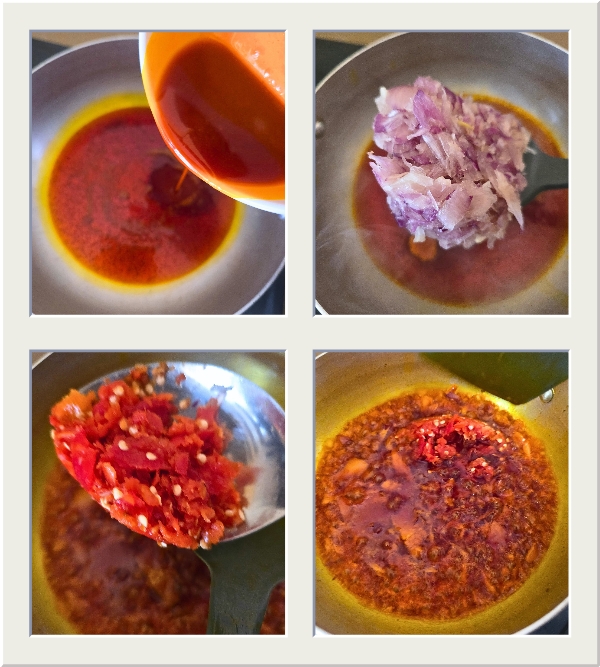
Meanwhile, place a clean pot on medium heat and pour in the palm oil. Allow it to warm gently, making sure it doesn’t bleach. Next, add the salt, mashed onions, mashed fresh peppers, and dried pepper. Stir and cook for 5–7 minutes.
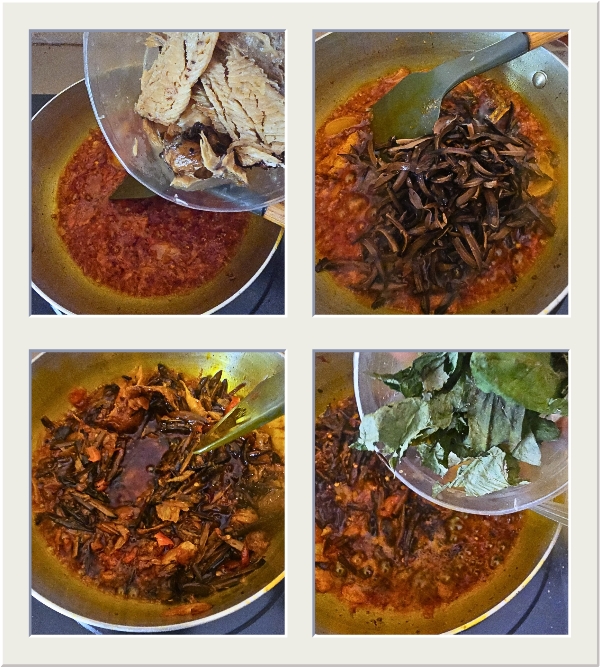
After that, add the washed fish (if using) and the fermented oil bean, then cook another 5 minutes. Finally, stir in the utazi leaves and ground calabash nutmeg. Heat for 2–3 minutes and remove the pot from heat.
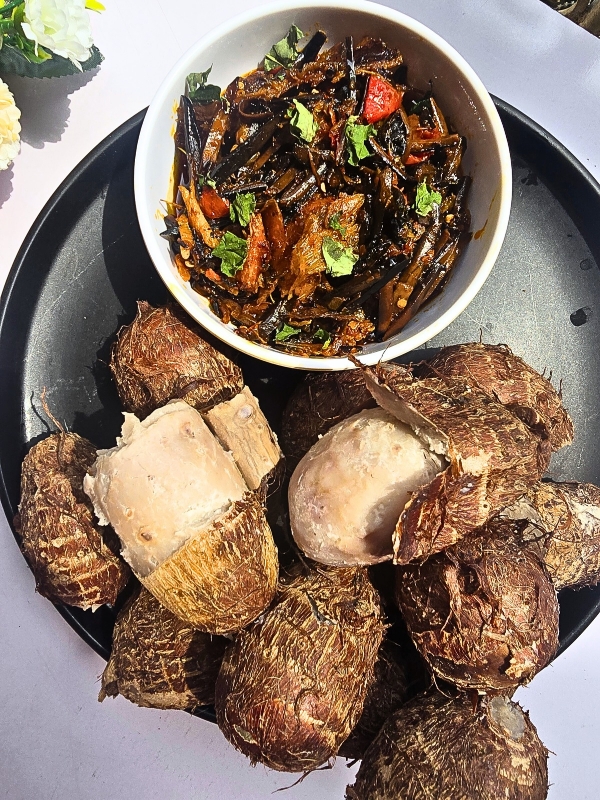
Serve the sauce in a small bowl alongside the boiled cocoyam.
Why This Dish Is So Simple Yet Satisfying
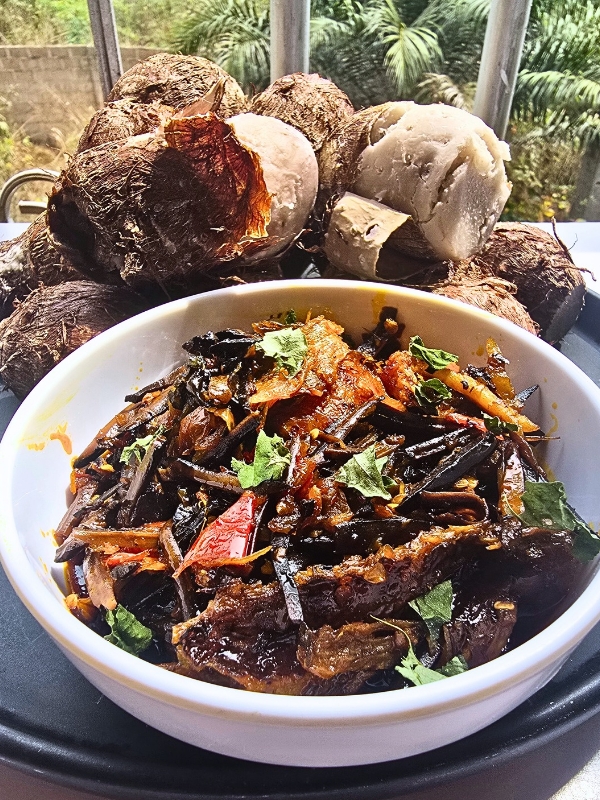
This dish uses no thickener, requires no long simmer, and avoids blending. Instead, each ingredient keeps its identity. The palm oil adds warmth, the pepper delivers heat, and the utazi contributes gentle bitterness. Meanwhile, the cocoyam softens and balances everything.
Overall, this food works because it trusts its ingredients.
Common Mistakes People Make
-
Overheating or bleaching the palm oil
-
Adding too much utazi, making the dish bitter
-
Overcooking the sauce
-
Using watery, unrinsed ugba
-
Skipping onions, even though they balance the heat
Ingredient Substitutes (US & UK Friendly)
-
Cocoyam: Taro root or eddoe
-
Palm oil: Annatto-infused oil (only if necessary)
-
Utazi leaf: Dandelion greens or arugula (use sparingly)
-
Ugba (oil bean): Natto or sliced olives (texture substitute)
-
Calabash nutmeg: A small pinch of nutmeg combined with clove
When Is This Food Commonly Eaten?
People usually eat this dish:
-
For lunch or dinner
-
During lighter eating periods
-
After long, tiring days
-
Whenever comfort food feels right
Most people enjoy it fresh.
How Long Cocoyam with Traditional Sauce Lasts
This dish tastes best the same day. However, the sauce can last 24–36 hours in the refrigerator. Cocoyam hardens when cold, so reheat it gently. Overall, this meal doesn’t freeze well.
Frequently Asked Questions
1. What Are the Health Benefits of Cocoyam?
Cocoyam is not just delicious; it is also packed with impressive health benefits that make it one of Nigeria’s most nutritious root vegetables. First and foremost, cocoyam is rich in dietary fibre, which actively supports healthy digestion and keeps you feeling fuller for longer.
Additionally, it contains significant amounts of potassium, which helps regulate blood pressure and supports heart health. Furthermore, cocoyam is loaded with Vitamin C and Vitamin E, both of which boost your immune system and protect your skin from damage.
Another important benefit is its relatively low glycaemic index compared to other carbohydrates, meaning it releases energy slowly and steadily without spiking your blood sugar.
As a result, cocoyam is an excellent food choice for people managing diabetes or watching their weight. Overall, adding cocoyam to your diet regularly is one of the simplest ways to nourish your body with whole, natural food.
2. What Is the English Name of Cocoyam?
Cocoyam is commonly known in English as Taro Root or Old Cocoyam. However, depending on the variety, it also goes by the names Eddoe or Dasheen in different parts of the world.
In Nigeria specifically, the two most common types are the old cocoyam (Colocasia esculenta) and the new cocoyam (Xanthosoma sagittifolium), both of which are widely used in traditional cooking across the South and Southeast of the country.
So the next time you see taro root mentioned in an international recipe, know that your beloved Nigerian cocoyam is essentially the same thing.
3. Is Cocoyam Healthier Than Yam?
This is a great question and the answer genuinely depends on what your health goals are. On one hand, cocoyam contains more fibre than yam, which makes it better for digestion and blood sugar control.
Additionally, cocoyam has a lower glycaemic index than yam, meaning it is a smarter choice for people managing diabetes or trying to lose weight. On the other hand, yam is higher in calories and carbohydrates, making it a better option for people who need sustained energy for physical activity.
Furthermore, yam contains more Vitamin B6, which supports brain health and mood regulation. Ultimately, both are nutritious and valuable; cocoyam wins for weight management and blood sugar control, while yam wins for energy and brain health. The best approach is to enjoy both as part of a balanced Nigerian diet.
4. Is Cocoyam a Carbohydrate or Protein?
Cocoyam is primarily a carbohydrate. It is a starchy root vegetable, which means its main nutritional contribution is complex carbohydrates that provide your body with steady, long-lasting energy.
However, cocoyam also contains a small but notable amount of protein compared to other root vegetables, which makes it slightly more nutritious than cassava or plantain in that regard.
Additionally, it provides healthy amounts of fibre, vitamins, and minerals that support overall wellbeing. So while cocoyam is not a protein source, it is far more than just a simple carb; it is a wholesome, nutrient-dense food that deserves a regular place on your plate.
5. What Are Cocoyam Leaves Used For?
Cocoyam leaves are incredibly versatile and widely used across West and Central Africa. First and foremost, the leaves are used to cook Ofe Onugbu and various traditional soups, where they add a rich, earthy flavour and deep green colour.
Furthermore, cocoyam leaves are highly nutritious; they are rich in iron, calcium, Vitamin A, and Vitamin C, making them one of the most nutrient-dense leafy vegetables in Nigerian cuisine.
Additionally, in many communities, the leaves are used to wrap food during cooking, acting as a natural steaming vessel. However, it is important to always cook cocoyam leaves thoroughly before eating, as raw leaves contain calcium oxalate which can cause irritation.
Once properly cooked, they are completely safe, delicious, and deeply nourishing.
6. How Do You Make Cocoyam Chips?
Cocoyam chips are a crunchy, delicious, and healthier alternative to regular potato chips, and making them at home is surprisingly easy. First, peel and wash your cocoyam, then slice it as thinly and evenly as possible using a sharp knife or mandoline slicer.
Next, soak the slices in salted water for 15 minutes to remove excess starch. After that, drain and pat them completely dry; this step is crucial for achieving maximum crunch.
Then, either deep fry in hot oil until golden and crispy, or brush lightly with oil and bake at 180°C for 20–25 minutes, flipping halfway through.
Finally, season immediately with salt, pepper, or your favourite spice blend while still hot. As a result, you get perfectly crispy cocoyam chips that are great as a snack, side dish, or party finger food.
7. What Are the Types of Cocoyam?
There are two main types of cocoyam widely grown and consumed in Nigeria and across West Africa. First, there is the Old Cocoyam (Colocasia esculenta), which is the most common variety.
It has a round, hairy corm with a slightly purple or white flesh and a mildly nutty flavour. This is the variety most commonly used in traditional Nigerian recipes like cocoyam soup and ofe ede.
Second, there is the New Cocoyam (Xanthosoma sagittifolium), which is larger, has a more elongated shape, and a slightly creamier texture when cooked.
Additionally, there are several other lesser-known varieties grown across Africa and Asia, including the Eddoe and Dasheen varieties. However, for most Nigerian recipes, the old cocoyam remains the preferred and most flavourful choice.
8. Cocoyam vs Taro — What Is the Difference?
Many people wonder whether cocoyam and taro are the same thing; and the answer is that they are closely related but not entirely identical. First and foremost, both cocoyam and taro belong to the same plant family (Araceae) and share very similar nutritional profiles.
Furthermore, the old cocoyam (Colocasia esculenta) is actually the same plant as taro, just known by different names in different parts of the world.
However, the new cocoyam (Xanthosoma sagittifolium) is a different species entirely, though it looks and tastes similar. Additionally, taro is widely consumed across Asia, the Pacific Islands, and the Caribbean, while cocoyam is the dominant name used across West and Central Africa.
So in short, if a recipe calls for taro root and you have Nigerian cocoyam at hand, you can confidently use it as a direct substitute in most cases.
Conclusion on Cocoyam with Traditional Sauce
This cocoyam and palm oil sauce doesn’t try to impress — and that’s exactly why it works. It delivers honest food, deep cultural roots, and quiet satisfaction.
So, have you ever eaten cocoyam before, or is this your first time seeing it prepared this way?