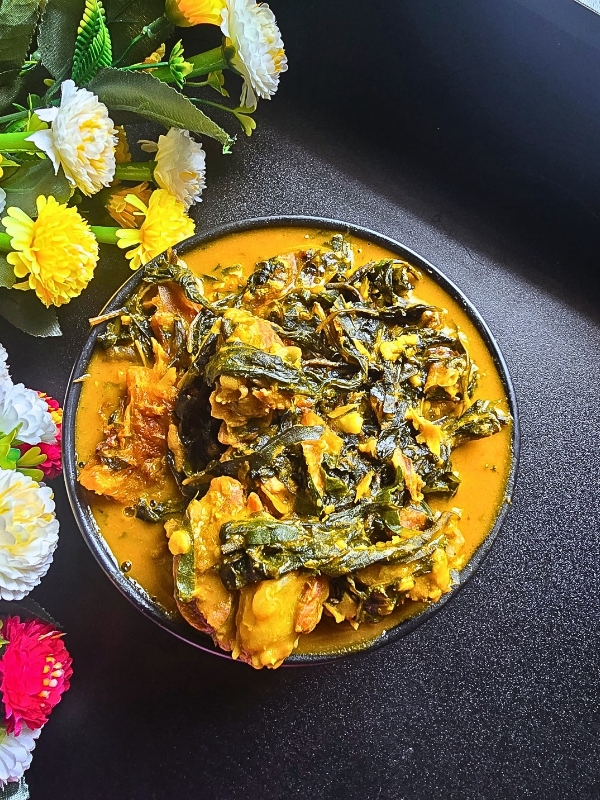
This is Easy Nigerian cocoyam soup recipe (ofe Ede)
If you’ve ever wanted to bring the rich flavors of Nigeria into your kitchen, cocoyam soup; locally known as Ofe Ede; is a dish you simply must try. Not only is it hearty and creamy, but it also combines cocoyam, fresh palm nuts, spices, and proteins in a way that is both comforting and unforgettable.
Whether you’re planning a family gathering, celebrating a festive occasion, or craving a comforting meal, Ofe Ede is the perfect choice. In this post, I’ll walk you through everything you need to know: what the soup is, why it’s loved, exact ingredients, step-by-step cooking instructions, common mistakes, and helpful tips.
How I Learned Ofe Ede
I first tasted Ofe Ede at my grandmother’s house in southeastern Nigeria. One Sunday morning, the kitchen was filled with the aroma of freshly pounded cocoyam and palm nuts simmering on the stove. Meals like this reminds me of the popula Oha soup which is similar. For recipe, check How to Cook Oha Soup (Ofe Oha) – Nigerian Recipe with Cocoyam
Meanwhile, my grandmother, with her worn wooden mortar and pestle, taught me a simple truth: “Food cooked with love carries a story.”
She pounded the cocoyam into smooth balls, squeezed the palm nuts into thick juice, and added bitterleaf to balance the flavor. At that moment, I realized that cooking Ofe Ede wasn’t just about following a recipe; it was about care, patience, and connection.
Every stir of the pot and every leaf added told a story of family, tradition, and celebration.
Since then, this soup has traveled with me from Nigeria to my kitchen and every time I make it, it brings back memories of family laughter, Sunday gatherings, and the warmth of home.
What is Cocoyam Soup (Ofe Ede)?
Cocoyam soup is a traditional Nigerian soup made primarily from cocoyam (taro root) and fresh palm nuts. The cocoyam is cooked and pounded, while the palm nuts are processed into a rich, smooth juice that forms the base of the soup.
In addition, the soup is often flavored with:
-
Habanero peppers for heat
-
Bitterleaf and uziza leaves for balance
-
Crayfish and locust beans (ogiri) for umami
-
Beef and dried fish for protein
This combination results in a creamy, slightly starchy soup with bold flavors and a comforting texture that is irresistible.
Nigerian cocoyam soup Recipe.
Equipment
- 1 mortar and pestle For pounding cocoyam and palm kernel
Ingredients
- ½ kilogram raw cocoyam Peel and chop into chunks before boiling;pound while still hot for the smoothest most lump free result. Cocoyam is the thickening agent that gives ofe ede its signature creamy texture.
- 7 whole habanero peppers Adjust quantity to your preferred heat level; blend smooth before adding for even heat distribution throughout the soup. Substitute with scotch bonnet for a more authentic Nigerian flavor.
- 3 cubes seasoning Maggi or Knorr work best; crumble before adding for even flavor distribution. Season gradually as dried fish and crayfish already contribute natural saltiness.
- ½ kilogram fresh palm kernel nuts Cook until tender before pounding; squeeze thoroughly to extract maximum juice as the richness and thickness of your final soup depends entirely on the quality of palm nut juice extracted.
- ½ cup crayfish Cook until tender before pounding; squeeze thoroughly to extract maximum juice as the richness and thickness of your final soup depends entirely on the quality of palm nut juice extracted.
- 1 handful dried fish Soak in hot water for 10-15 minutes before adding to remove excess salt and soften for better texture in the soup
- ½ kilogram beef Season and cook until tender before adding to the soup; reserve the beef stock and add it to the palm nut base for extra depth of flavor.
- 1 tablespoon salt Season gradually; seasoning cubes, dried fish and crayfish already contribute significant saltiness so always taste before adding more
- 1 handful A handful freshly squeezed bitterleaf Wash thoroughly and boil for 5 minutes before adding to remove excess bitterness; this step is essential for a perfectly balanced soup.
- 1 teaspoon ogiri Also known as locust beans; use sparingly as a little goes a very long way. Adds incredible fermented depth and umami that no other ingredient can replicate.
- 6 whole uziza leaves Add in the very last minute before serving only; uziza loses its distinctive peppery aroma almost immediately when overcooked so timing this step correctly is critical
Instructions
- Step 1: Prepare the Bitterleaf: First, wash the bitterleaf thoroughly to remove excess bitterness. Then, boil it for 5 minutes and drain. Doing this ensures the leaves are slightly tender and not overpoweringly bitter.
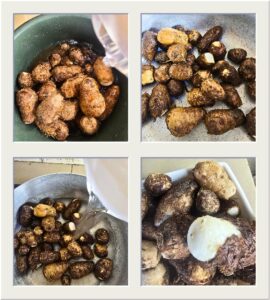
- Step 2. Cook Cocoyam and Palm Kernel Nuts: Next, peel and chop the cocoyam into chunks. Boil until soft. Meanwhile, cook the palm kernel nuts until tender. These steps can be done simultaneously to save time.
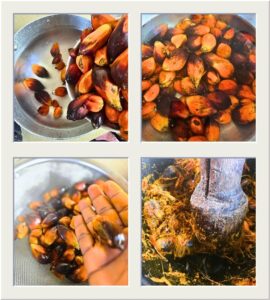
- Pound Cocoyam and Extract Palm Nut Juice: Once cooked, pound the cocoyam until smooth. At the same time, pound the palm nuts and squeeze out the juice. This juice serves as the rich base of your soup.
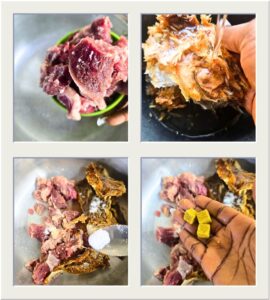
- Step 4: Combine Cocoyam and Palm Nut Juice: Afterward, place the palm nut juice on medium heat. Gradually add the pounded cocoyam, molding it into balls. Stir continuously until it melts into a creamy, smooth mixture.
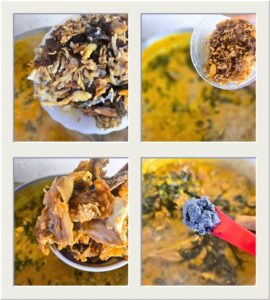
- Step 5: Add Seasonings and Vegetables: Then, add salt, seasoning cubes, bitterleaf, habanero peppers, and ogiri (locust beans). Cook for 15 minutes, stirring occasionally. This allows the flavors to blend fully.
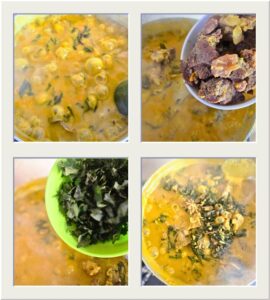
- Step 6: Add Proteins and Finish with Uziza Leaves: Finally, add beef, dried fish, and crayfish. Cook for an additional 5 minutes. Just before serving, add uziza leaves to preserve their aroma and flavor. Your Ofe Ede is now ready to serve!
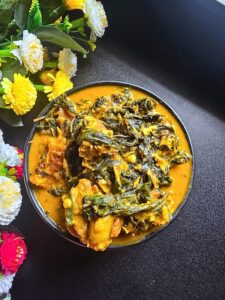
Notes
Pound cocoyam while still hot for the smoothest most lump free result; cold cocoyam becomes stiff and difficult to pound to a smooth consistency. Palm nut juice tip:
Squeeze palm nuts thoroughly to extract maximum juice; the richness and thickness of your final soup depends entirely on the quality and quantity of palm nut juice extracted. Combining tip:
Add pounded cocoyam gradually into boiling palm nut juice in small balls rather than all at once; this prevents lumping and ensures it melts smoothly into a creamy consistent base. Uziza leaf tip:
Add uziza leaves in the very last minute before serving; uziza loses its distinctive peppery aroma quickly when overcooked so timing this step correctly makes a significant difference. Seasoning tip:
Add ogiri sparingly; this traditional fermented locust bean seasoning delivers incredible depth but too much can overpower the delicate palm nut and cocoyam flavors. Serving suggestion:
Best served hot alongside pounded yam, fufu or eba for a complete authentic Southeast Nigerian dining experience. Storage tip:
Store leftover ofe ede in an airtight container in the refrigerator for up to 3 days. Reheat gently in a pot over medium heat with a splash of water to restore consistency.
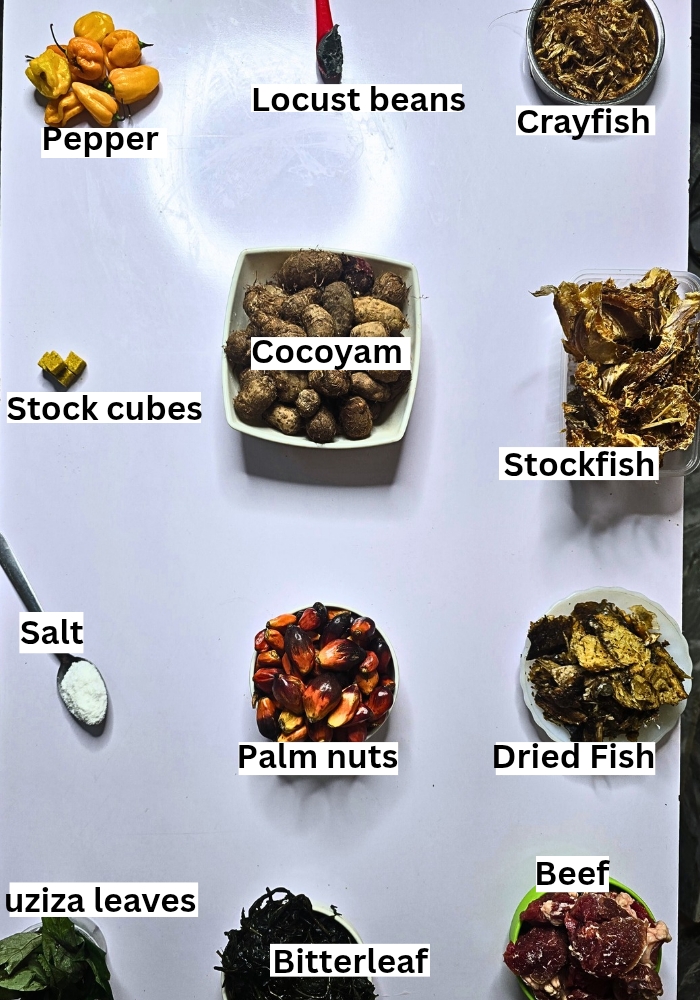
Ingredients (Exact Measurements) Nigerian cocoyam soup Recipe
-
½ kilogram raw cocoyam
-
7 habanero peppers (adjust to taste)
-
3 seasoning cubes
-
½ kilogram fresh palm kernel nuts
-
½ cup crayfish
-
A full handful dried fish
-
½ kilogram beef
-
1 tablespoon salt
-
A handful freshly squeezed bitterleaf
-
1 teaspoon ogiri (locust beans)
-
6 uziza leaves
Tip: Fresh palm nuts make the soup rich and creamy, while bitterleaf and uziza leaves provide a slightly bitter and peppery counterpoint to the richness.
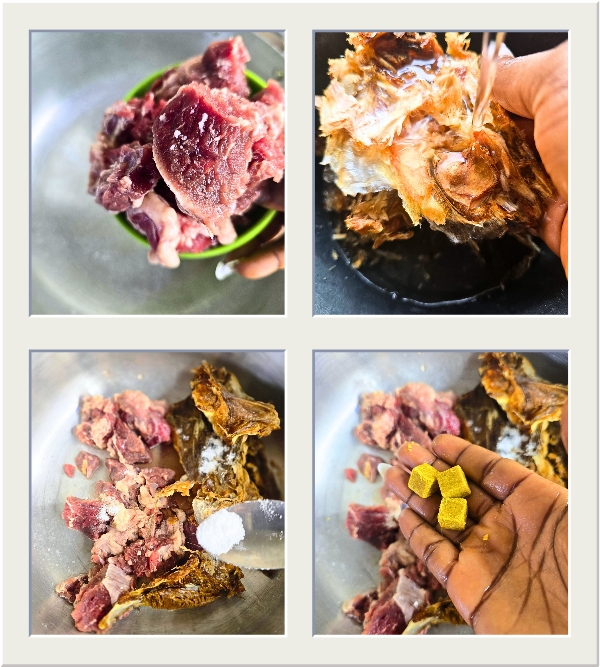
Step-by-Step Cooking Instructions on Nigerian cocoyam soup Recipe
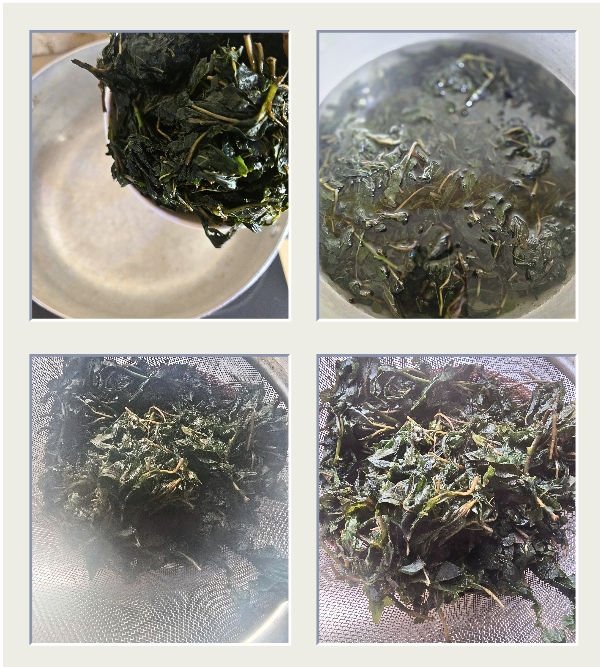
1. Prepare the Bitterleaf for Nigerian cocoyam soup Recipe
First, wash the bitterleaf thoroughly to remove excess bitterness. Then, boil it for 5 minutes and drain. Doing this ensures the leaves are slightly tender and not overpoweringly bitter.
2. Cook Cocoyam and Palm Kernel Nuts
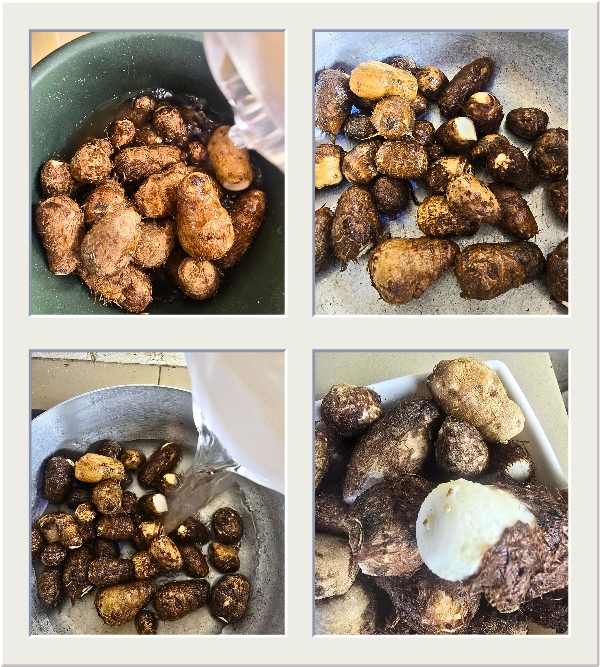
Next, peel and chop the cocoyam into chunks. Boil until soft. Meanwhile, cook the palm kernel nuts until tender. These steps can be done simultaneously to save time.
3. Pound Cocoyam and Extract Palm Nut Juice
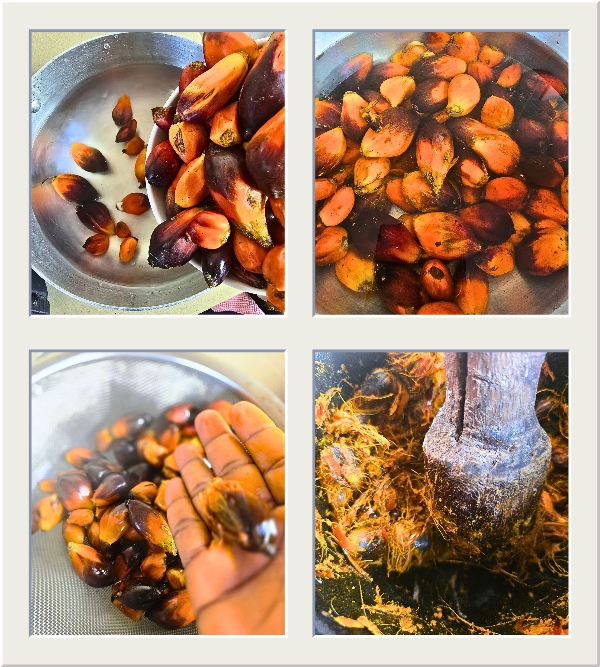
Once cooked, pound the cocoyam until smooth. At the same time, pound the palm nuts and squeeze out the juice. This juice serves as the rich base of your soup.
4. Combine Cocoyam and Palm Nut Juice for Nigerian cocoyam soup Recipe
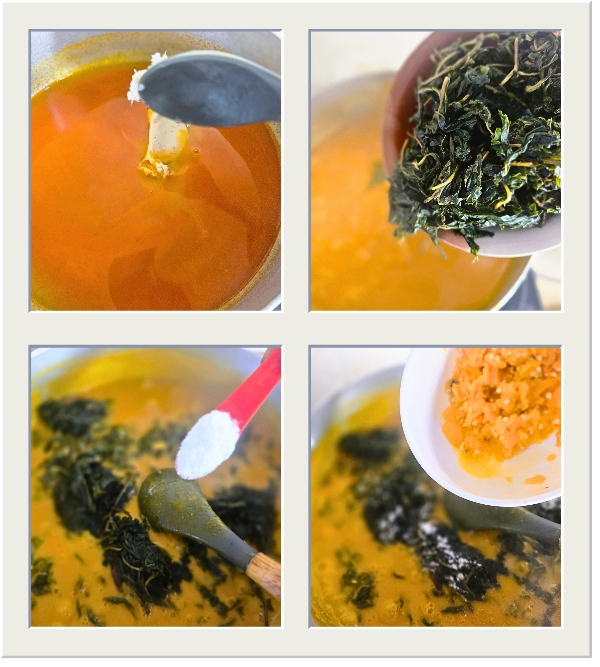
Afterward, place the palm nut juice on medium heat. Gradually add the pounded cocoyam, molding it into balls. Stir continuously until it melts into a creamy, smooth mixture.
5. Add Seasonings and Vegetables
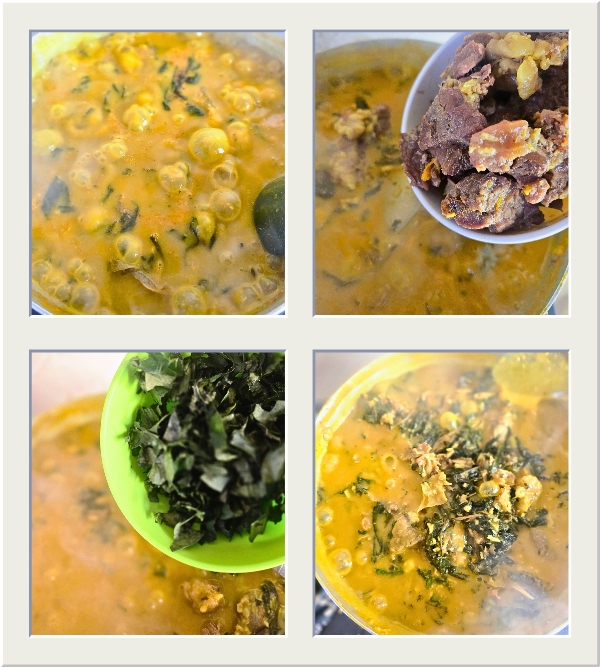
Then, add salt, seasoning cubes, bitterleaf, habanero peppers, and ogiri (locust beans). Cook for 15 minutes, stirring occasionally. This allows the flavors to blend fully.
6. Add Proteins and Finish with Uziza Leaves in Nigerian cocoyam soup Recipe
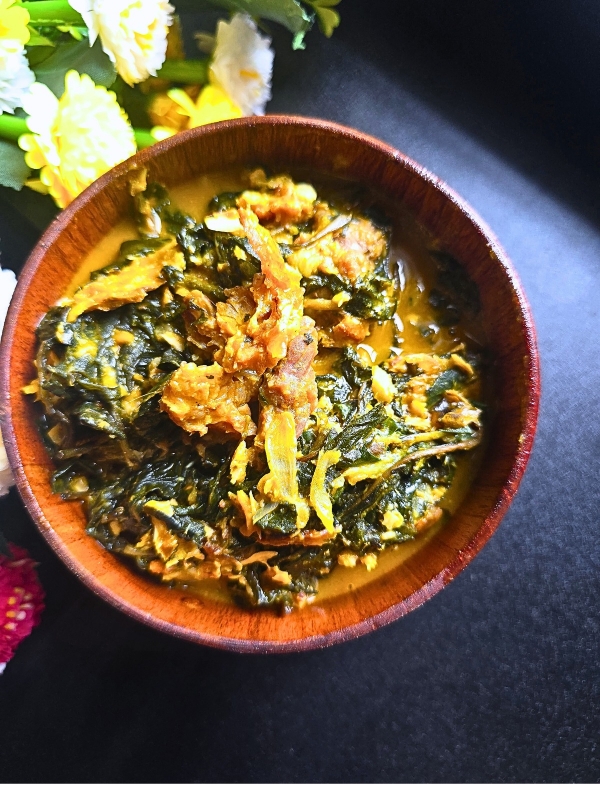
Finally, add beef, dried fish, and crayfish. Cook for an additional 5 minutes. Just before serving, add uziza leaves to preserve their aroma and flavor.
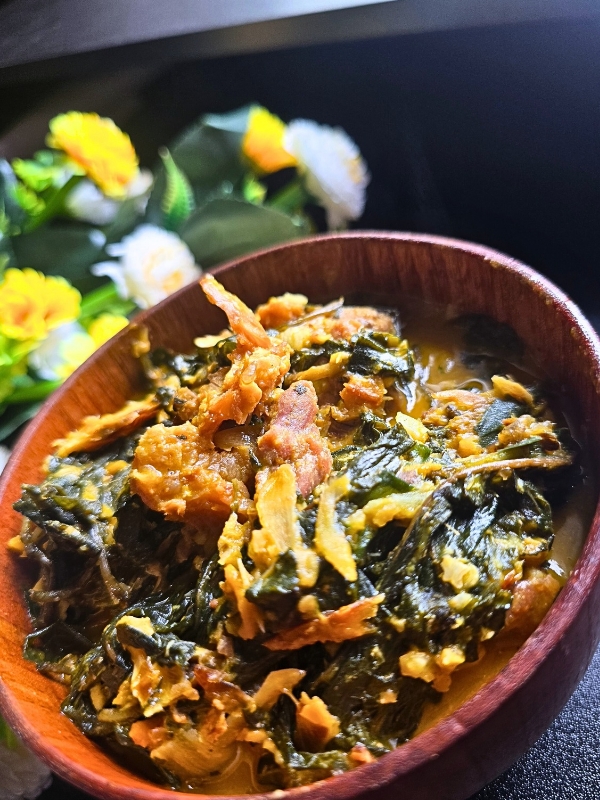
Your Ofe Ede is now ready to serve!
Cooking Tips for Perfect on Nigerian cocoyam soup Recipe
-
To reduce bitterness, always boil the bitterleaf before adding it to the soup.
-
Pound the cocoyam thoroughly; a smooth texture is key to creamy soup.
-
Use fresh palm nuts whenever possible; canned concentrate works but alters flavor.
-
Adjust spice levels to taste; habanero peppers are very hot.
-
Add proteins last to prevent overcooking and maintain tenderness.
Common Mistakes People Make on Nigerian cocoyam soup Recipe(Ofe Ede)
-
Skipping bitterleaf prep: Leads to overly bitter soup.
-
Undercooking cocoyam: Prevents a smooth, creamy texture.
-
Overcooking beef or fish: Results in tough, rubbery proteins.
-
Ignoring palm nut juice: Using only stock or coconut milk changes the authentic flavor.
-
Not stirring properly: Causes clumps and uneven consistency.
To avoid these mistakes, follow the steps carefully, and remember that patience is part of the process.
When is Cocoyam Soup Eaten?
Cocoyam soup is traditionally served with swallows such as pounded yam, fufu, eba, or semolina. It is perfect for:
-
Family gatherings and celebrations
-
Traditional ceremonies
-
Festive periods like Christmas or New Year
-
Cozy weeknight dinners
Similarly, it can be enjoyed whenever you crave a hearty, filling, and flavorful soup.
FAQs on Easy Nigerian cocoyam soup (Ofe Ede) recip
1. What Is Nigerian Ofe Ede?
Nigerian ofe ede is a traditional Igbo cocoyam soup made by pounding boiled cocoyam into a smooth paste and combining it with extracted palm nut juice, bitterleaf, uziza leaves, beef, dried fish and bold indigenous seasonings.
Furthermore Igbo families actively serve it at weddings, naming ceremonies and festive celebrations across Southeast Nigeria.
2. What Is the Best Ofe Ede Recipe?
The best ofe ede recipe uses fresh cocoyam pounded smooth while still hot, freshly extracted palm nut juice as the base, properly washed bitterleaf, quality dried fish, ground crayfish and ogiri.
Additionally adding uziza leaves at the very last minute preserves their peppery aroma — consequently delivering the most authentic deeply flavored result every time.
3. How Do You Cook Ofe Ede With Bitterleaf?
First wash and boil bitterleaf for 5 minutes to remove excess bitterness. Next build your palm nut juice base and gradually add pounded cocoyam stirring continuously until creamy.
Then add beef, dried fish, crayfish, ogiri and seasonings and cook for 15 minutes. Finally add bitterleaf and uziza leaves in the last few minutes; preserving their fresh flavor and aroma perfectly.
4. What Are the Ingredients for Cocoyam Soup?
The essential ingredients are raw cocoyam, fresh palm kernel nuts, bitterleaf, uziza leaves, beef, dried fish, ground crayfish, habanero peppers, ogiri, seasoning cubes and salt.
Also, each ingredient plays a specific role; cocoyam thickens the soup, palm nut juice provides the rich base and uziza leaves deliver the signature peppery aroma that makes ofe ede completely unique.
5. How Do You Cook Cocoyam Soup With Oha?
Follow the same base method as ofe ede but substitute oha leaves for bitterleaf. Furthermore shred oha leaves by hand rather than cutting with a knife; cutting causes them to lose color and flavor.
Additionally add shredded oha leaves in the very last minute before serving to actively preserve their vibrant color and delicate fresh aroma.
6. How Do You Cook Cocoyam Soup With Bitterleaf?
Wash bitterleaf thoroughly squeezing under running water until bitterness reduces then boil for 5 minutes and drain. Next combine freshly extracted palm nut juice with pounded cocoyam stirring continuously until thick and creamy.
Add beef, dried fish, crayfish, ogiri and seasonings then cook for 15 minutes. Finally add bitterleaf and finish with uziza leaves just before serving.
7. What Is Cocoyam Soup?
Cocoyam soup is a thick creamy West African soup using pounded boiled cocoyam as its primary thickener cooked in a palm nut juice base with leafy vegetables and assorted proteins.
Also it varies across Nigerian communities — Southeast Igbo communities make ofe ede with bitterleaf while others use oha or uziza leaves — consequently delivering a uniquely earthy creamy flavor no other Nigerian soup replicates.
8. What Is Ofe Owerri?
Ofe Owerri is a prestigious traditional Igbo soup from Owerri in Imo State — widely regarded as one of the most luxurious soups in Nigerian cuisine. Furthermore it combines cocoyam with a generous variety of assorted proteins including beef, offal, dried fish, stockfish and snails in a rich palm nut base with bitterleaf and traditional Igbo seasonings.
Why People Love this Nigerian cocoyam soup (Ofe Ede) recipe
People love Ofe Ede not just for its flavor but for its cultural and emotional significance. The creamy texture, slightly bitter-sweet taste, and aromatic spices make it irresistible. Also each bite carries a sense of family, tradition, and comfort, making it more than just a soup; t’s a connection to home.

Appreciating the commitment you put into your blog and detailed information you offer.
It’s awesome to come across a blog every once in a while that isn’t the same outdated rehashed information.
Fantastic read! I’ve saved your site and I’m including your RSS feeds to my Google account.
Oh, thank you so much, Sotelozita.