
Native Palm Oil Rice.
Nigerian Native Palm Oil Rice; parboiled rice slow cooked in fresh palm nut extract with palm oil, cow skin, dried catfish, ground crayfish, locust beans, toasted calabash nutmeg, fresh pepper and scent leaf into a thick richly flavored and deeply aromatic traditional one-pot rice dish that tastes unmistakably like home. Naturally gluten free and packed with bold indigenous seasonings; a beloved Nigerian comfort meal ready in under an hour.
Servings 5 people
Calories 660kcal
Cost $4
Equipment
- 1 Blender for blending the spices.
Ingredients
- 2 cups of rice – Parboiled Parboil partially and wash thoroughly before cooking; partial parboiling reduces excess starch and ensures the grains remain separate and firm when cooked in the rich palm nut extract rather than clumping together into an overly sticky mass.
- ½ cup palm oil Heat gently on medium heat before adding onions and never bleach; unbleached palm oil preserves its natural nutrients, rich color and authentic flavor that forms the deeply satisfying base this entire dish is built on.
- 3 cups Fresh palm nut extract Use freshly extracted palm nut water rather than canned concentrate where possible; fresh palm nut extract delivers a richer thicker more authentic flavor base that canned versions simply cannot replicate in a traditional one pot rice dish like this.
- 1 whole handful fresh pepper Crush or blend before adding for even heat distribution throughout the rice; whole pepper pieces cook unevenly and deliver inconsistent heat in some bites while blended pepper infuses every grain with the same bold spicy warmth.
- 1 whole bulb onion Slice and add during the palm oil frying stage before any other ingredient; onions fried in palm oil until softened release their natural sweetness into the base creating a more aromatic and deeply flavored foundation than raw onions added late can achieve.
- 1 tablespoon fresh locust beans Add during the seasoning stage and allow to steam for 5 minutes before adding palm nut extract; locust beans need heat and time to release their deep fermented umami flavor fully into the base. Use sparingly as too much overpowers every other indigenous seasoning in the dish.
- 1 teaspoon salt Always taste and adjust before adding the rice; once the rice absorbs the cooking liquid adjusting the salt level becomes significantly harder. The dried catfish, crayfish and seasoning cubes already contribute substantial saltiness so season carefully at this stage.
- 2 whole seasoning cubes Crumble before adding for even distribution; add one first and taste before adding the second as every brand carries a different salt level and the dried catfish and crayfish already contribute significant savory depth to the base.
- 3 whole calabash nutmeg Toast and grind fresh just before use for the strongest most aromatic flavor; pre-ground or old calabash nutmeg loses its distinctive warm earthy aroma quickly and delivers a significantly weaker flavor than freshly toasted and ground seeds.
- 1 whole handful fresh scent leaf dd only in the very last 1–2 minutes before turning off the heat; scent leaf loses its distinctive earthy aroma almost immediately when overcooked so adding it too early wastes its most valuable and irreplaceable contribution to the finished dish.
- 1 cup crayfish Use freshly ground crayfish rather than pre-packaged powder where possible; fresh ground crayfish delivers a deeper more authentic seafood flavor and aroma that elevates the entire dish significantly beyond what commercial powder achieves.
- ½ kilogram cow skin Wash thoroughly and add early during the palm oil frying stage; adding ponmo early allows it to absorb the palm oil flavor fully before the other seasonings and palm nut extract go in delivering a more deeply seasoned and satisfying chewy texture in the finished rice.
- 2 pieces dried catfish – Washed thoroughly Wash carefully to remove excess salt and any bones before adding; dried catfish already contributes significant saltiness to the dish so always taste the base before adjusting salt after the catfish goes in.
Instructions
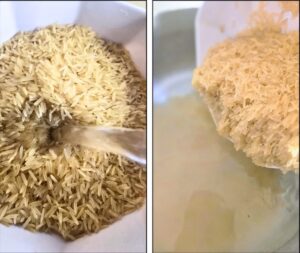
- Step 1: Parboil and Wash the Rice: First, parboil the rice partially to reduce excess starch. Then, wash thoroughly and drain. Afterward, set aside. This step is essential because it ensures the grains remain separate and do not become overly sticky when cooked in palm extract.
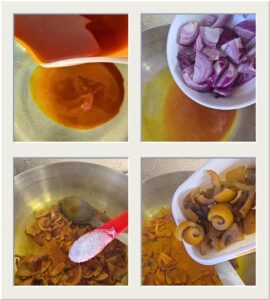
- Step 2: Build the Flavor Base: Next, place a clean pot on medium heat. Add:Half cup palm oil; Allow it to heat gently; however, do not bleach the oil. Then add: Sliced onions, salt, washed and chopped cow skin. Stir continuously and allow the mixture to fry for several minutes. At this stage, the onions soften while the cow skin begins to absorb flavor.
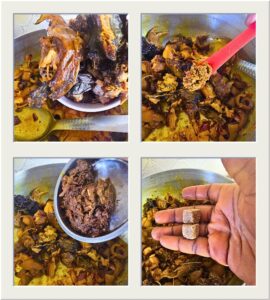
- Step 3: Add Indigenous Seasonings: After that, incorporate the traditional seasonings: Fresh locust beans, Washed dried catfish, Ground calabash nutmeg, Ground crayfish, Crushed fresh pepper, Seasoning cubes. Allow everything to steam for about 5 minutes. As a result, the spices release their oils and blend harmoniously.
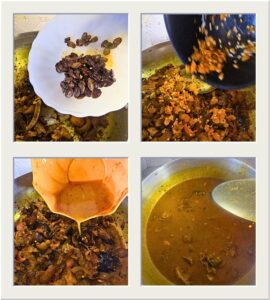
- Step 4: Add Palm Nut Extract: Now, pour in the fresh palm nut extract; enough to cook the rice properly. Allow the mixture to boil. Meanwhile, taste and adjust salt if necessary. Importantly, the palm extract forms the signature thick, flavorful base that distinguishes this dish from other Nigerian rice recipes.
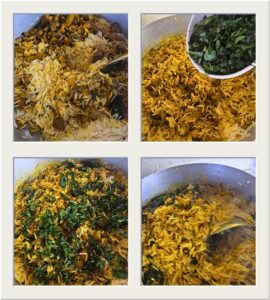
- Step 5: Add Rice and Cook. Once boiling steadily, add the washed parboiled rice. Then stir gently to combine. Cover and cook on medium to low heat until: The rice absorbs the palm extract; The grains become soft; oil begins to slightly rise to the surface. Occasionally, stir to prevent burning. However, avoid excessive stirring, as this may break the grains. Finally, add sliced fresh scent leaf. Cover and steam for 1–2 minutes. Afterward, turn off the heat and let the rice rest for 5 minutes before serving.
Notes
Parboil the rice partially and wash thoroughly before cooking; partial parboiling reduces excess starch and ensures the grains remain separate and firm when cooked in the rich palm nut extract rather than clumping together into an overly sticky mass.
Heat the palm oil gently on medium heat before adding onions and never bleach it; unbleached palm oil preserves its natural nutrients, rich color and authentic flavor that forms the deeply satisfying base this dish is built on. Add the cow skin early during the frying stage so it absorbs the palm oil flavor fully before the other seasonings go in.
Add all indigenous seasonings; locust beans, dried catfish, ground calabash nutmeg, ground crayfish, fresh pepper and seasoning cubes; together and allow them to steam for 5 minutes before adding the palm nut extract. This steaming stage allows every spice to release its natural oils and blend harmoniously into the flavor base rather than sitting separately in the finished rice.
Pour in enough fresh palm nut extract to cook the rice properly and allow it to boil fully before adding the rice; adding rice to liquid that has not yet boiled causes uneven cooking where the bottom grains overcook while the top remains hard. Taste and adjust salt before the rice goes in as adjusting seasoning after is much harder once the rice absorbs the liquid.
Add the parboiled rice and stir gently once to combine then cover and cook on medium to low heat; avoid excessive stirring during cooking as vigorous stirring breaks the rice grains and releases excess starch making the dish heavy and sticky instead of fluffy and well separated.
Add fresh scent leaf only in the very last 1–2 minutes before turning off the heat; scent leaf loses its distinctive earthy aroma almost immediately when overcooked so adding it too early wastes its most valuable contribution to the finished dish.
Allow the rice to rest off the heat for 5 minutes after cooking before serving; this resting time allows the grains to fully absorb any remaining liquid and settle into a perfectly cooked fluffy texture.
Serving suggestion:
Serve hot on its own or alongside fried fish, grilled chicken, Nigerian salad or coleslaw for a complete deeply satisfying traditional Nigerian meal.
Heat the palm oil gently on medium heat before adding onions and never bleach it; unbleached palm oil preserves its natural nutrients, rich color and authentic flavor that forms the deeply satisfying base this dish is built on. Add the cow skin early during the frying stage so it absorbs the palm oil flavor fully before the other seasonings go in.
Add all indigenous seasonings; locust beans, dried catfish, ground calabash nutmeg, ground crayfish, fresh pepper and seasoning cubes; together and allow them to steam for 5 minutes before adding the palm nut extract. This steaming stage allows every spice to release its natural oils and blend harmoniously into the flavor base rather than sitting separately in the finished rice.
Pour in enough fresh palm nut extract to cook the rice properly and allow it to boil fully before adding the rice; adding rice to liquid that has not yet boiled causes uneven cooking where the bottom grains overcook while the top remains hard. Taste and adjust salt before the rice goes in as adjusting seasoning after is much harder once the rice absorbs the liquid.
Add the parboiled rice and stir gently once to combine then cover and cook on medium to low heat; avoid excessive stirring during cooking as vigorous stirring breaks the rice grains and releases excess starch making the dish heavy and sticky instead of fluffy and well separated.
Add fresh scent leaf only in the very last 1–2 minutes before turning off the heat; scent leaf loses its distinctive earthy aroma almost immediately when overcooked so adding it too early wastes its most valuable contribution to the finished dish.
Allow the rice to rest off the heat for 5 minutes after cooking before serving; this resting time allows the grains to fully absorb any remaining liquid and settle into a perfectly cooked fluffy texture.
Serving suggestion:
Serve hot on its own or alongside fried fish, grilled chicken, Nigerian salad or coleslaw for a complete deeply satisfying traditional Nigerian meal.