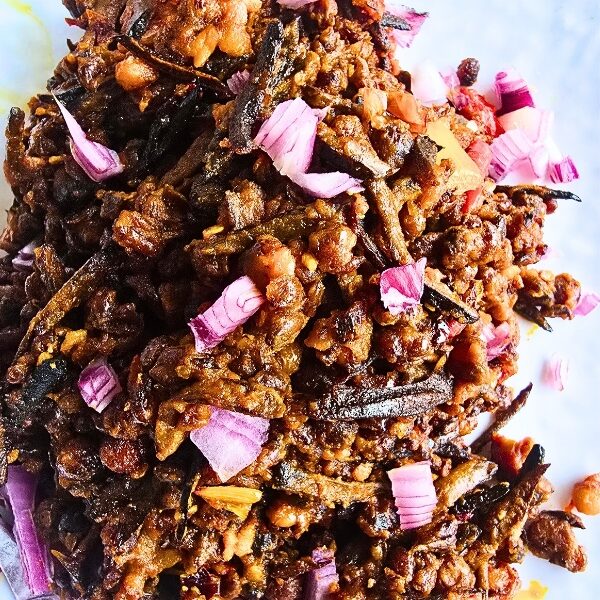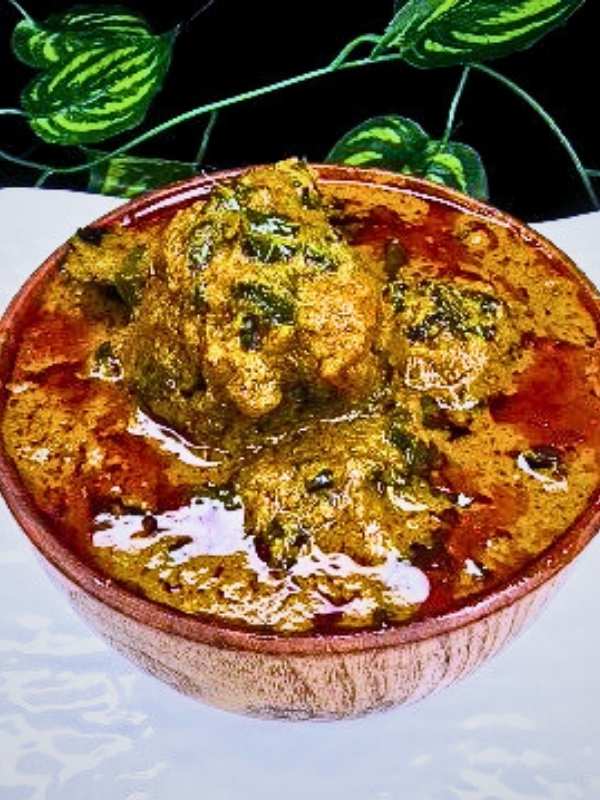
You are about to learn how to cook Ofe Akwu in this post.
If you’ve ever wondered how to bring bold, authentic Nigerian flavors into your kitchen, Ofe Akwu—also known as Banga stew—is the perfect place to start. Originally from the Igbo people of southeastern Nigeria, this palm nut stew has been a centerpiece of family gatherings for generations.
Traditionally, villagers would boil fresh palm fruits, add tender meats, smoked fish, and aromatic spices, and then gather around the table to share stories, laughter, and community.
Today, making Ofe Akwu in the US or UK is easier than ever. With canned palm nut concentrate and accessible ingredients like beef or chicken, you can recreate this rich, flavorful stew at home.
Not only does it taste amazing, but cooking it also connects you with a centuries-old culinary tradition. From the first fragrant stir to the final spoonful over fluffy white rice, every step is a celebration of Nigerian culture, family, and flavor.
What is Ofe Akwu (banga stew)?
Banga stew, also known as Ofe Akwu, is a palm nut–based Nigerian stew popular among the Igbo people of Eastern Nigeria. The base comes from freshly boiled and pounded palm fruits, giving the stew its signature creamy texture and bright reddish color.
It is typically served with white rice, yam, or plantain, making it one of the most common Nigerian palm nut soup recipes. In other regions like the Niger Delta, a close variation called Banga soup is served with starch or fufu but with a slight difference in recipe.
Ingredients to Cook Ofe Akwu (Easy Nigerian Banga Stew Recipe)
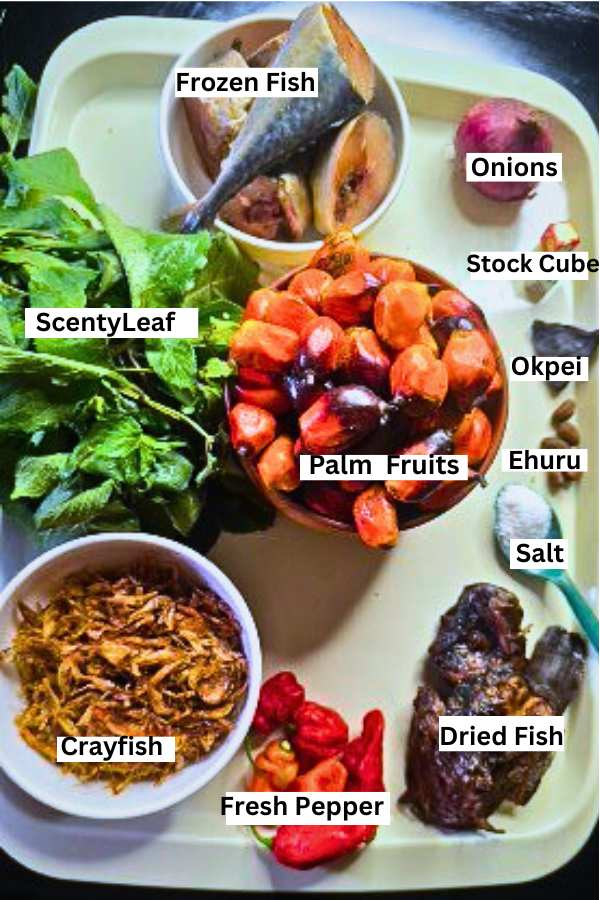
Here are the traditional ingredients for Nigerian Banga stew (Ofe Akwu), explained for all to understand:
- Fresh Palm Nut (Akwu or Banga): The key ingredient. These are palm fruits from the oil palm tree, boiled and pounded to extract a thick, oily juice—the base of the stew.
- Crayfish: Ground dried crayfish gives the stew a deep, seafood-like umami flavor.
- Fresh Fish or meat: Catfish, tilapia, or or any protein of choice are often used for protein and freshness.
- Dried Fish: Adds smokiness and an intense, savory flavor.
- Onions: Provides sweetness and aroma.
- Ehuru (African Nutmeg): A warm, aromatic spice similar to nutmeg but earthier.
- Okpei (Ogiri Okpei or Dawadawa): A traditional Nigerian fermented seasoning made from locust beans—pungent but rich, like fish sauce.
- Seasoning Cubes: A staple seasoning in Nigerian cooking.
- Scent Leaf (Nchanwu): Similar to basil but more peppery, giving Banga stew its signature aroma.
- Pepper: Scotch bonnet or chili peppers add heat.
- Salt: Balances all the flavors.
How to Make Ofe Akwu (How to Cook Ofe Akwu (Easy Nigerian Banga Stew Recipe)
Follow these simple steps to cook this meal
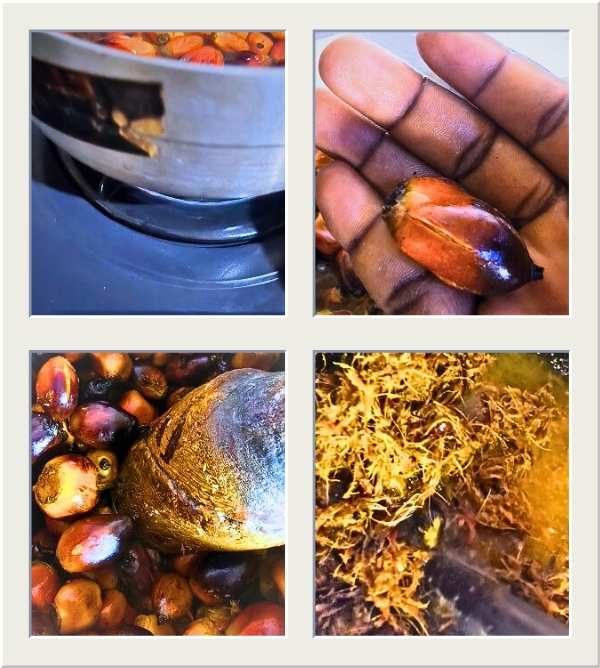
- Prepare the Palm Nut Extract: Wash and boil fresh palm nuts until soft.
Pound gently in a mortar to release the oily flesh.
Add warm water, mix, and strain through a sieve to collect the palm extract (this is your stew base).
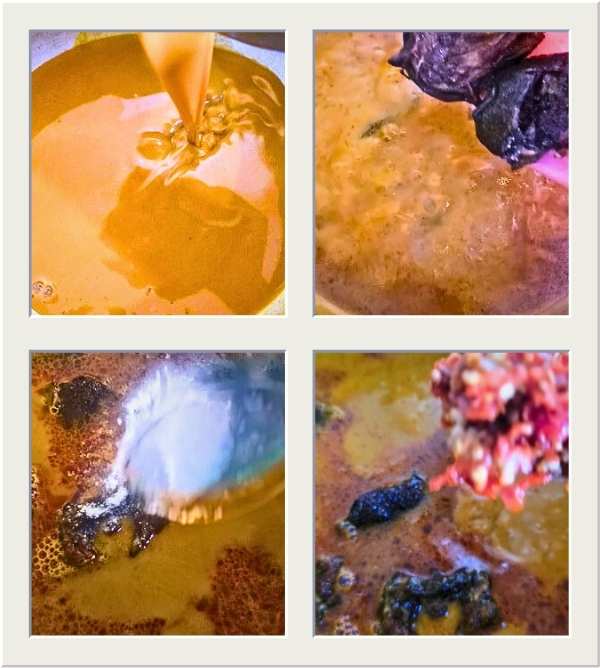
2. Cook the Palm Nut Base: Pour the palm nut extract into a pot and boil.
Allow it to thicken slightly until oil begins to rise to the surface.
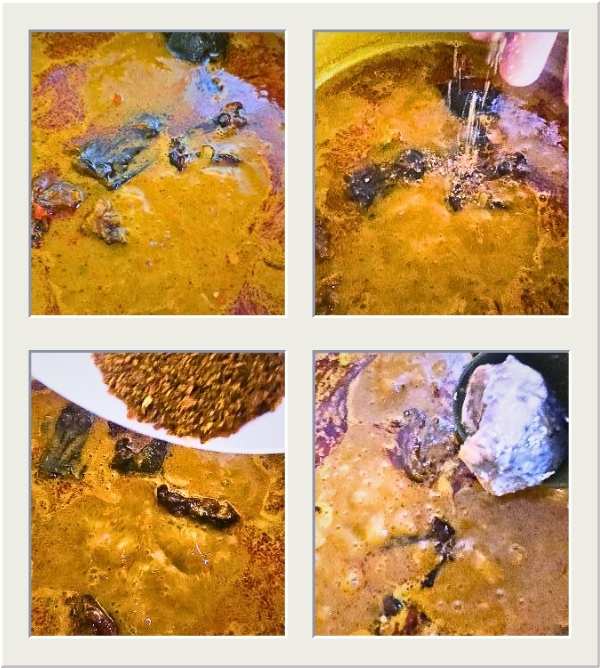
3. Season the Base: Add chopped onions, ground crayfish, ehuru, and a little okpei.
Season with salt, pepper, and Maggi cubes.
4. Add Fish and Dried Fish: Gently add fresh fish and dried fish. Let them simmer in the palm nut base so they absorb the flavor.
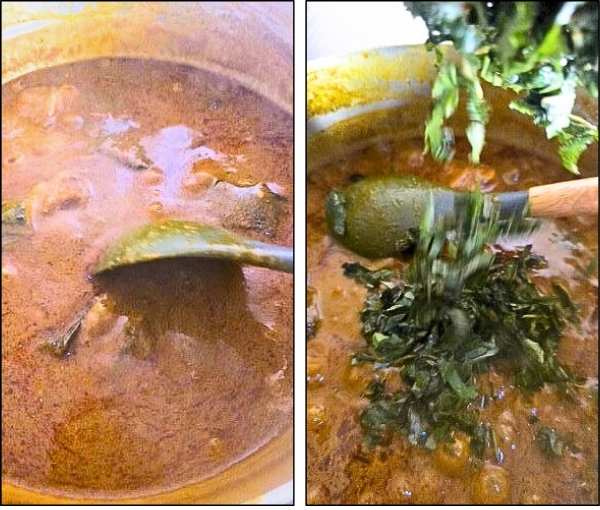
- Finish with Scent Leaf: When the stew has thickened, add fresh scent leaves (nchanwu) for aroma and freshness.
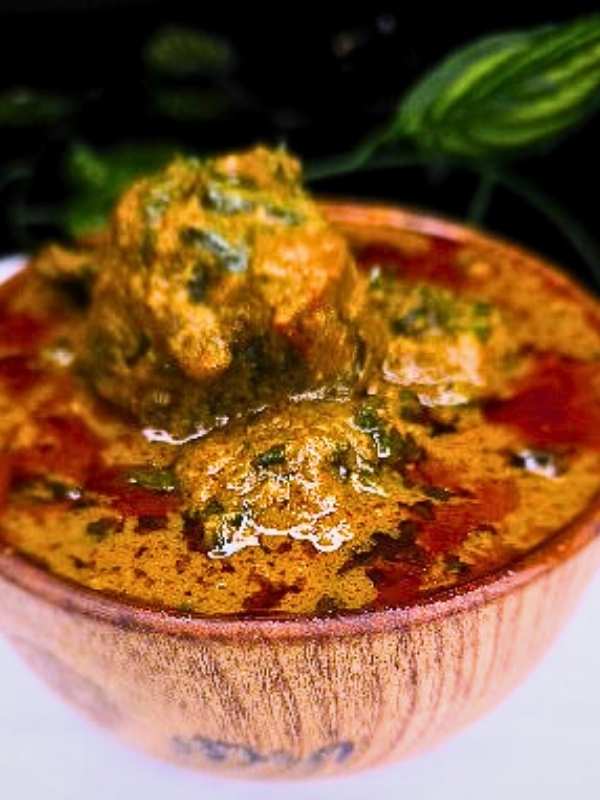 Serve Hot: Enjoy with rice, boiled yam, or plantain.
Cultural Significance of Ofe Akwu)
Banga stew is more than just food; it’s part of Nigerian cultural heritage. Among the Igbo, Ofe Akwu
is commonly cooked on Sundays and during festive occasions. In the Urhobo culture, http://www.101lasttribes.com/tribes/urhobo.html a thicker, spicier version (Banga soup) is paired with starch.
This dish brings families together, often cooked in large pots and shared with guests.
Its deep, nutty taste and rich aroma evoke memories of home, family, and celebration.
Nutritional Benefits of Ofe Akwu
Beyond its irresistible taste, Ofe Akwu is also nutritious:
- Palm nuts are rich in antioxidants, vitamin E, and healthy fats.
- Fish provides omega-3 fatty acids and lean protein.
- Scent leaf (nchanwu) contains anti-inflammatory compounds and vitamins A and C.
- Okpei (fermented locust beans) supports gut health with probiotics.
Frequently asked Questions
1. What exactly is Ofe Akwu?
To begin with, Ofe Akwu is a traditional Nigerian palm nut stew originating from the Igbo people of southeastern Nigeria. Essentially, it’s made from palm fruit extract and is often cooked with beef, dried fish, stockfish, and indigenous spices. Therefore, when served with rice, it transforms into a rich, flavorful meal that’s both comforting and authentic.
2. So, is Ofe Akwu the same as Banga soup?
While they are indeed very similar, there are subtle differences. Specifically, Ofe Akwu is generally thicker and is most commonly paired with rice. In contrast, Banga Soup, popular among the Urhobo people, is slightly more watery and often eaten with fufu or starch. Consequently, both versions celebrate the same palm fruit base but cater to different serving traditions.
3. Where can I buy palm fruit concentrate in the US or UK?
First and foremost, you can look for palm fruit concentrate at African or Caribbean grocery stores. Additionally, international aisles in major supermarkets or online retailers like Amazon often carry it. For example, stores such as Walmart, Tesco, or Sainsbury’s sometimes stock canned palm nut concentrate labeled as “Banga Sauce” or “Palm Nut Concentrate.”
4. What can I substitute for palm fruit extract?
Truthfully, there is no perfect substitute because palm fruit gives Ofe Akwu its signature flavor. Nevertheless, you can use canned palm nut concentrate if fresh fruit isn’t available. Moreover, blending fresh palm fruit (available in African stores) is another option. However, any Western ingredient will not replicate the authentic taste entirely.
5. Which meat works best?
Typically, beef chunks, goat meat, smoked turkey, or dried fish are ideal. Therefore, in the US and UK, opting for beef stew cuts or short ribs can make this dish more accessible without compromising flavor.
6. Is Ofe Akwu spicy?
Yes, indeed! Traditionally, it includes Scotch bonnet peppers. However, you can always adjust the level of heat depending on your personal preference, making it as mild or fiery as you like.
7. What should I serve with Ofe Akwu?
Most commonly, it is served with white rice. Additionally, you could consider boiled yam, plantains, or even fufu. Consequently, for US and UK audiences, pairing Ofe Akwu with long-grain or basmati rice works beautifully.
8. How long does it take to cook Ofe Akwu?
If using canned palm fruit concentrate, the cooking time is roughly 45 minutes to 1 hour. Conversely, if using fresh palm fruits, the process takes longer because of the time needed to extract the juice. Therefore, preparation method significantly affects cooking duration.
9. Can Ofe Akwu be made vegetarian?
Absolutely! Simply skip the meat and fish while adding mushrooms or vegetable stock for depth. Moreover, you can boost the flavor with traditional spices like ogiri. Naturally, the taste will differ slightly from the traditional version, yet it remains delicious.
10. How should I store and reheat Ofe Akwu?
To start, store it in an airtight container in the fridge for up to 3–4 days. Furthermore, freezing it allows for up to 2 months of storage. When ready to eat, reheat on the stovetop or microwave. Interestingly, Ofe Akwu often tastes even richer the next day!
11. Is Ofe Akwu healthy?
Palm fruit is indeed nutritious, being rich in healthy fats, vitamin A, and antioxidants. Nevertheless, because it is calorie-dense, moderation is key. Consequently, enjoying it as part of a balanced diet is ideal.
12. Why might my Ofe Akwu taste bitter?
Typically, bitterness comes from burnt palm extract, overcooked spices, or too much ogiri. Hence, cooking over medium heat while stirring occasionally usually prevents this.
Conclusion on How to Cook Ofe Akwu (Easy Nigerian Banga Stew Recipe)
Banga Stew (Ofe Akwu) is more than a recipe. It’s a taste of Nigeria’s culture and history.
With its creamy palm nut base, smoky spices, and fragrant herbs, this Nigerian palm nut stew stands as
one of the most loved dishes in West African cuisine.
Whether you’re Nigerian craving a taste of home, or a global food lover exploring authentic African food recipes,
this dish is worth trying. Serve it with rice, yam, or plantain, and you’ll understand why Banga stew recipe is a favorite across Nigeria and beyond.
You May Also Like: