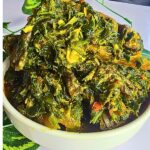
Easy Vegetable Soup Recipe (Step-by-Step for Beginners).
This Nigerian vegetable soup is built in layers, starting with steaming meat to lock in flavor, then gradually adding fish, palm oil, and vegetables. Each step enhances richness, aroma, and texture, resulting in a thick, flavorful soup with vibrant greens and a deep, savory taste.
Servings 4 people
Calories 350kcal
Cost $20
Equipment
- 1 Knife. slicing of vegetables
Ingredients
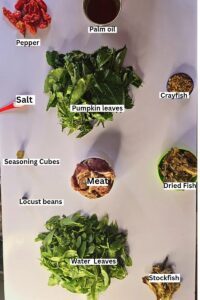
- 3 cups sliced ugu leaves Young, freshly sliced ugu leaves
- 2 cups sliced waterleaf Fresh, tender leaves (not tough stems)
- 1 handful stockfish Use well-softened head or body pieces
- 2 cubes seasoning cubes Maggi or Knorr
- 1 tablespoon Salt sea salt or regular table salt
- 1/2 kilo beef Use soft cuts like shank or chuck
- 1 teaspoon fermented locust beans Use a small amount of well-fermented iru (preferably the soft, paste-like type)
- 1 cup of palm oil Use fresh red palm oil (not bleached)
- ½ cup of dry fish Smoked catfish or panla works best
- 1 cup crayfish Use finely ground crayfish
- 1 tablespoon Fresh pepper Scotch bonnet (ata rodo)
Instructions
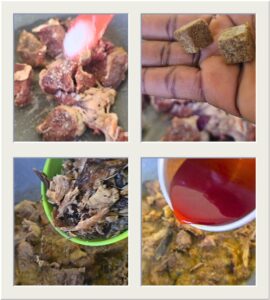
- Step 1: Steam the Meat: To begin, I steamed my beef and stockfish together with salt and seasoning cubes. Allowing them to cook slowly helped the meat absorb all the flavors before any liquid was added. This stage builds the foundation for the soup’s taste.
- Step 2: Add Dry Fish: Once the meat was tender, I added my washed dry fish. Then, I poured in a small amount of water and let everything simmer gently. At this point, the kitchen was filled with an irresistible aroma, and I knew the soup was well on its way.
- Step 3: Add Palm Oil and Pepper: Next, I stirred in the palm oil and fresh pepper. The mixture began to bubble softly, turning into a warm, golden red; the true color of a good Nigerian soup. The palm oil not only added flavor but also brought a depth and richness that tied everything together.
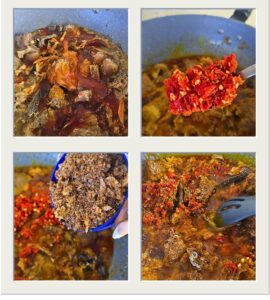
- Step 4: Add Crayfish and Waterleaf: After that, I added the crayfish and sliced waterleaf. Since waterleaf naturally releases moisture, I didn’t need to add extra water. I let it steam gently for about two minutes, stirring continuously so the ingredients blended well. By this time, the soup’s texture had become beautifully thick and inviting.
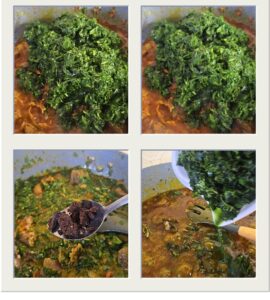
- Step 5: Add Ugu Leaves: Finally, I added the ugu leaves. I stirred gently and allowed the soup to simmer for another three minutes. Ugu gives the soup its body and green vibrance; it’s truly the heart of Nigerian vegetable soup. Once the leaves softened, I turned off the heat, and my soup was ready.
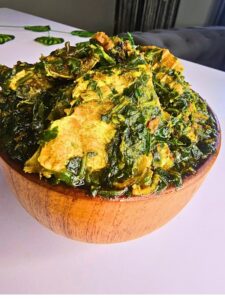
Notes
Start by steaming the beef and stockfish with seasoning to build a deep, flavorful base without adding water. Once tender, add dry fish and a small amount of water to create a rich, aromatic broth. Stir in palm oil and fresh pepper to give the soup its signature color and depth.
Next, add crayfish and waterleaf, allowing the natural moisture from the waterleaf to thicken the soup without extra liquid. Finally, finish with ugu leaves, letting them simmer briefly to retain their vibrant color and nutrients. The result is a thick, well-blended Nigerian vegetable soup with a rich taste and inviting texture.