
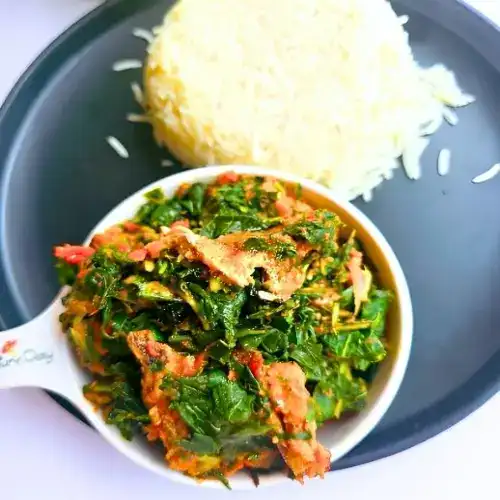
Nigerian Vegetable Stew Recipe (Easy & Healthy)
If you’re craving a dinner that’s healthy, quick, and still deeply satisfying, then this Nigerian vegetable stew recipe (known at home as Ofe Akwukwo) is exactly what you need
Indeed, it’s packed with fresh Nigerian spinach (ugu or “green”), tender goat meat, and a rich pepper-tomato base, and as a result, it pairs beautifully with rice while also working as an easy weeknight meal that doesn’t compromise on flavor.
To begin with, I created this recipe on a night I wanted something nourishing to pair with rice.
Specifically, I wanted something that would keep my blood sugar in check while still tasting like home. What came out of that craving turned into one of my most repeated dinners: fast, budget-friendly, and, above all, endlessly comforting.
Throughout this post, therefore, I’ll walk you through exactly how to make it, share the blanching technique that keeps the vegetables vibrant green, and, in addition, show you how to make this stew without tomatoes for anyone who wants a lighter or tomato-free version.
Finally, I’ll answer the most common questions people ask about vegetable stew.
What Is Nigerian Vegetable Stew?
First and foremost, Nigerian vegetable stew is a one-pot dish built around a blended pepper and tomato base, then simmered with protein, and ultimately finished with leafy greens.
Unlike the more popular tomato stew that Nigerians typically pair with jollof rice, this version leans lighter; after all, it includes nutrient-dense greens like ugu (Nigerian spinach) or scent leaf.
In many ways, it’s similar in spirit to vegetable sauce, yet it’s distinct enough to earn its own place at the dinner table. For instance, it’s richer in protein because of the goat meat, and, at the same time, it’s lighter in oil than a traditional egg sauce or tomato stew.
Moreover, because it comes together so quickly, it’s often the dish I turn to when I want something wholesome without spending hours in the kitchen.
Why You’ll Love This Recipe
Before diving into the ingredients, here’s why this particular vegetable stew stands out:
- It’s quick. From start to finish, this comes together in under an hour, so it’s perfect for a weeknight dinner.
- It’s budget-friendly. Since goat meat, a handful of greens, and a few pantry staples go a long way, you won’t need to break the bank.
- It’s genuinely healthy. Because it leans on vegetables rather than heavy starches, it’s therefore a great option if you’re trying to eat lighter or manage your glycemic load.
- It reheats well. Like most Nigerian stews, the flavor actually deepens overnight, meaning leftovers taste even better the next day.
- It’s flexible. Whether you swap the protein, adjust the greens, or even skip the tomatoes altogether, this stew adapts easily to what you have on hand.
Altogether, these qualities make it one of those recipes worth keeping in regular rotation, especially on busy weeknights.

Nigerian Vegetable Stew Recipe (Easy & Healthy)
Equipment
- 1 pot for making vegetable sauce
Ingredients
- 500 g goat meat Cut into bite-sized pieces for even cooking.
- 1/2 whole medium onion Divide as directed for cooking and blending.
- 4 whole medium fresh tomatoes Use ripe, fresh tomatoes for the best flavor.
- 1/2 cup fresh pepper Adjust the quantity to your preferred heat level.
- 1 whole bulb garlic Fresh garlic gives a richer aroma than garlic powder.
- 1 whole small thumb of ginger Adds warmth and balances the tomato flavor.
- 25 ml vegetable oil Any neutral cooking oil works well.
- 1/2 tablespoon stock cube Use your favorite brand for extra umami.
- 1/2 teaspoon salt Adjust to taste after combining all the ingredients.
- 1/2 tablespoon soy sauce Adds depth and enhances the savory flavor.
- 1 whole bunch Nigerian spinach Wash thoroughly and chop into bite-sized pieces.
- 1 whole handful scent leaf
Instructions
- Step 1: Prepare the Ingredients: Wash the vegetables, goat meat, peppers, onion, garlic, and ginger thoroughly. Cook the goat meat with half the salt, half the stock cube, sliced onion, and half the soy sauce until tender.

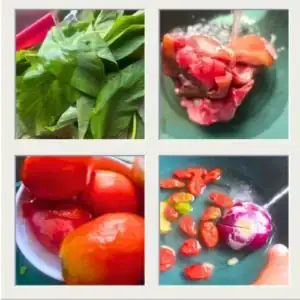
- Step 2: Make the Stew Base: Blend the tomatoes, remaining onion, fresh pepper, garlic, and ginger until smooth. Pour the mixture into a pan and cook until most of the excess water evaporates. Stir in the vegetable oil, remaining salt, and remaining soy sauce, then continue cooking, stirring occasionally.
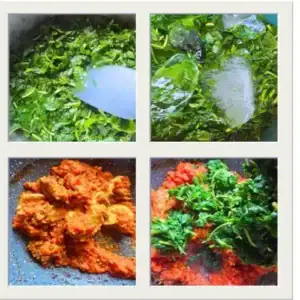
- Step 3: Blanch the Vegetables: Bring water to a boil and blanch the chopped vegetables for about 2 minutes. Drain immediately and transfer them to ice water to preserve their bright green color, then drain and pat dry.
- Step 4: Combine and Simmer: Add the cooked goat meat to the tomato base, followed by the blanched vegetables. Gently stir everything together and simmer for a few minutes until the flavors combine. Serve warm with rice, yam, plantain, or any preferred side.


Notes
Avoid overcooking the vegetables after adding them to the stew to keep their texture and nutrients.
Simmer the tomato mixture until most of the excess moisture evaporates for a richer, more concentrated flavor.
Adjust the amount of fresh pepper to suit your preferred spice level.
If the goat meat is tough, cook it longer until tender before adding it to the stew.
Ingredients for This Nigerian Vegetable Stew Recipe
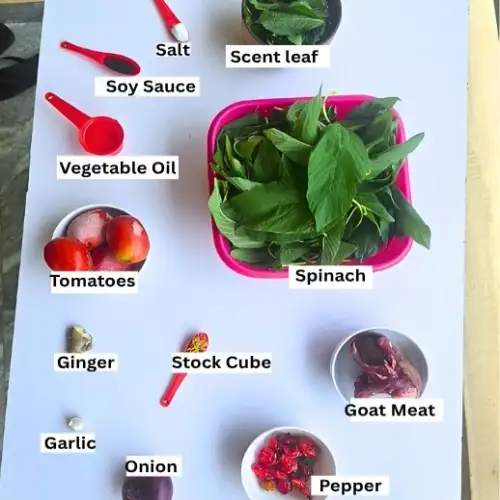
Below is everything you’ll need for this Nigerian vegetable stew recipe.
Meat:
- 500g (1/2 kg) goat meat, cut into pieces
- 1/2 teaspoon salt
- 1/2 tablespoon stock cube (or 1 cube, crushed)
- 1/2 medium onion, sliced
- 1/2 tablespoon soy sauce
For the pepper-tomato base:
- 4 medium fresh tomatoes
- 1/2 cup fresh pepper (scotch bonnet or tatashe, to taste)
- 1/2 medium onion
- 1 bulb garlic
- 1 small thumb of ginger
- 25ml vegetable oil
- 1/2 tablespoon stock cube
- 1/2 teaspoon salt
- 1/2 tablespoon soy sauce
Vegetables:
- 1 bunch Nigerian spinach (ugu/”green”), washed and chopped
- 1 handful scent leaf (nchanwu), washed and chopped
Notably, every ingredient here serves a purpose, so try not to skip any of them, even the small ones like ginger and scent leaf, since they add layers of aroma that are hard to replace.
How to Make This Nigerian Vegetable Stew Recipe
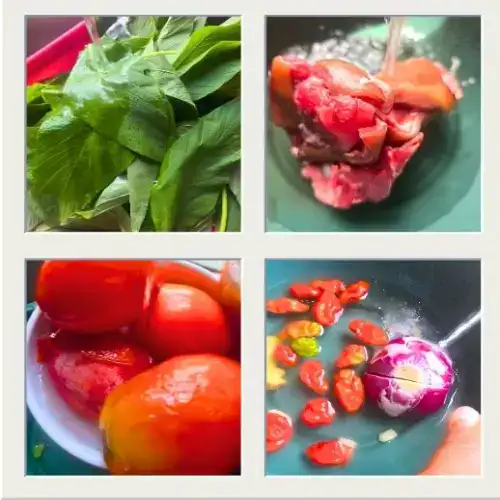
Now that the ingredients are ready, let’s move on to the method. Each step builds on the last, so follow them in order for the best results.
Step 1: Prep Your Ingredients
To start, wash all your ingredients thoroughly — the leaves, meat, pepper, onion, garlic, and ginger. Since clean, fresh ingredients make a noticeable difference in the final flavor, it’s worth taking your time here rather than rushing through.

Step 2: Cook the Goat Meat
Next, place the goat meat in a pot along with half the salt, half the stock cube, the sliced onion, and half the soy sauce. Then, cook until the meat becomes tender. Depending on the cut, this usually takes 25–35 minutes on medium heat, so check periodically and add a splash of water if needed.
Step 3: Blend the Pepper-Tomato Base
Meanwhile, while the meat cooks, blend the tomatoes, remaining onion, fresh pepper, garlic, and ginger into a smooth mix. Because this forms the flavor backbone of the stew, blend until fairly smooth for the best texture.

Step 4: Steam the Blended Mix
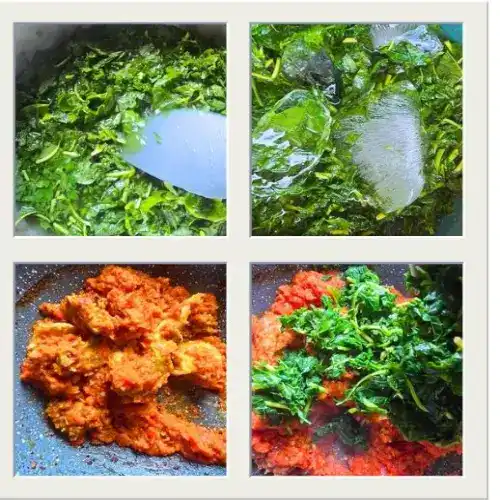
Once blended, place a clean pan on the fire and pour in the tomato-pepper mix. Afterward, allow it to steam until the excess water dries up a bit; in turn, this concentrates the flavor and removes the raw taste of the tomatoes.
Step 5: Season the Base
After that, stir in the vegetable oil, remaining salt, and remaining soy sauce. Then, cover the pan and let it steam further, stirring occasionally so it doesn’t stick to the bottom.
Step 6: Blanch the Vegetables
While the base continues to cook, bring a small pot of water to a boil. Add the chopped vegetables, and let them sit for about 2 minutes. Immediately afterward, drain and transfer them into a bowl of ice water to stop the cooking process. This technique, known as blanching, is what locks in that bright green color you want in your finished stew.

Step 7: Bring It All Together
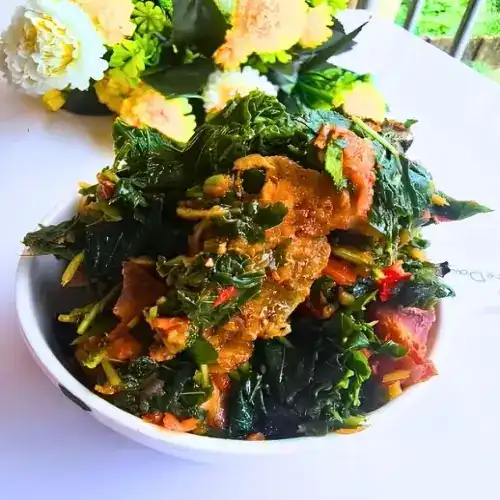
Once the vegetables are blanched, drain them and pat them dry. Then, add the tender goat meat into the pepper-tomato base first, followed by the blanched vegetables. Gently stir to combine, and finally, let everything simmer together for a few minutes so the flavors meld.
How to Cook Nigerian Vegetable Stew Without Tomatoes
Since many people search specifically for a tomato-free version, let’s address that directly. Whether you’re avoiding tomatoes for taste, availability, or dietary reasons, this stew adapts well without them, and the result is just as flavorful.
Why Skip the Tomatoes?
For one thing, tomatoes are traditionally added for body, sweetness, and color.
However, if you’d rather skip them, you can still achieve a rich, well-rounded stew by leaning more heavily on other ingredients instead. In fact, many Nigerian households make vegetable stew this way, particularly when tomatoes are out of season or simply unavailable.
What to Use Instead
Rather than tomatoes, increase the quantity of fresh pepper and onions to compensate for the missing base. Specifically, try this adjustment:
- 1 full cup of fresh pepper (instead of 1/2 cup)
- 1 full medium onion for the base (instead of half)
- An extra tablespoon of vegetable oil, since tomatoes usually add moisture
Method for the Tomato-Free Version
First, blend the pepper, onion, garlic, and ginger together, just as you would in the original recipe, but without the tomatoes. Then, follow the same steaming process outlined in Step 4 above, though note that the mixture will reduce faster since there’s less liquid from tomatoes. As a result, keep a closer eye on it so it doesn’t burn.
Once steamed, season the base the same way, using the vegetable oil, salt, and soy sauce. After that, proceed exactly as before: add the cooked goat meat, followed by the blanched vegetables, and simmer until combined.
What to Expect
The tomato-free version will taste spicier and slightly more savory, since there’s no natural tomato sweetness to balance the heat. Therefore, if you’re sensitive to spice, start with less pepper than recommended and adjust upward as needed. On the other hand, if you enjoy a punchier, more intense flavor, this version might actually become your new favorite.
What to Serve With This Nigerian Vegetable Stew Recipe
Because vegetable stew is versatile, it sits beautifully beside several Nigerian classics. Here are a few of my favorite pairings:
- Nigerian Local White Rice for the simplest and most traditional match
- Asun Jollof Rice if you want a smoky, spicier plate
- Smoky Party Jollof Rice for a celebratory, gathering-style meal
- Vegetable Yam Porridge, for a heartier, all-in-one option
- Plantain Fries, on the side for a touch of sweetness and crunch
- A chilled glass of Tiger Nut Milk, to round off the meal
Together, these pairings turn a simple stew into a complete, satisfying Nigerian meal.
Tips for the Best Nigerian Vegetable Stew Recipe
To help you get the best results every time, keep these tips in mind:
- Don’t skip the blanching step. Since it’s what keeps your greens looking fresh and appetizing instead of dull and overcooked, it’s worth the extra few minutes.
- Steam the tomato base properly. Otherwise, rushing this step leaves a raw, sour taste in the final stew.
- Adjust the pepper to your taste. Because fresh pepper varies in heat, start with less if you’re unsure, and then add more as you go.
- Use fresh scent leaf if you can find it. As mentioned earlier, it adds an aromatic quality that’s genuinely hard to replace.
- Don’t overcook the vegetables. Since they’re already blanched, they only need a few minutes in the stew; otherwise, they’ll lose both color and texture.
Storing This Nigerian Vegetable Stew Recipe
Once cooled, transfer any leftovers into an airtight container. From there, it keeps well in the fridge for up to 3–4 days, and, interestingly, the flavor often deepens overnight as the spices continue to meld.
Also, if you’d like to keep it longer, freeze it in portioned containers for up to 2 months. When you’re ready to eat, simply reheat gently on the stovetop, adding a splash of water if the stew has thickened too much.
Frequently Asked Questions About This Nigerian Vegetable Stew Recipe
What vegetables can I use for Nigerian vegetable stew?
Nigerian spinach (ugu) and scent leaf are the classic choice; however, you can substitute or add waterleaf, spinach, or even kale if ugu isn’t available where you live.
Can I make this Nigerian vegetable stew recipe without tomatoes?
Yes, absolutely. As explained above, you can increase the pepper and onion quantities to compensate, and the result is a spicier, equally delicious version of the stew.
How do I keep the vegetables green in stew?
Blanching is the key technique here. Specifically, boiling the vegetables briefly and then plunging them into ice water stops the cooking process and, as a result, preserves that bright green color.
Is this Nigerian vegetable stew recipe healthy?
Yes, it is. Since it’s built around leafy greens and lean protein rather than heavy starches or excess oil, it’s a lighter option that pairs well with rice without weighing down your glycemic load.
Can I use chicken or beef instead of goat meat?
Absolutely — chicken, beef, or even fish all work well in this recipe. That said, adjust the cooking time based on whichever protein you choose.
How long does vegetable stew last in the fridge?
Stored in an airtight container, it keeps well for up to 3–4 days in the fridge, and, alternatively, it can be frozen for longer storage.
Can I make this stew ahead of time?
Yes. In fact, many people find that the flavor improves after a day, so it’s a great make-ahead option for busy weeks.
What’s the difference between vegetable stew and vegetable soup?
Although the two are related, vegetable stew is typically thicker and oil-based, similar to a sauce, whereas vegetable soup tends to be lighter and more broth-based.
This Nigerian vegetable stew recipe proves that healthy, home-style cooking doesn’t need to be complicated.
About The Author



Easy and budget dinner
Healthy Vegetable Sauce that is Budget_Friendly