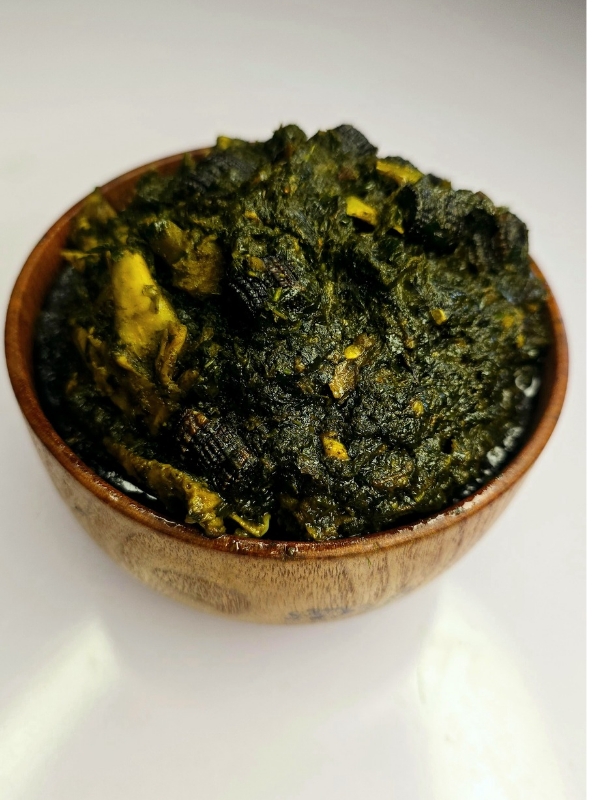
Afang Soup Recipe (Authentic Nigerian Efik Soup).
Afang Soup (sometimes spelled “Ukung” or “Okazi soup” in related forms) is one of the most beloved soups in southern Nigeria, especially among the Efik/Ibibio people.
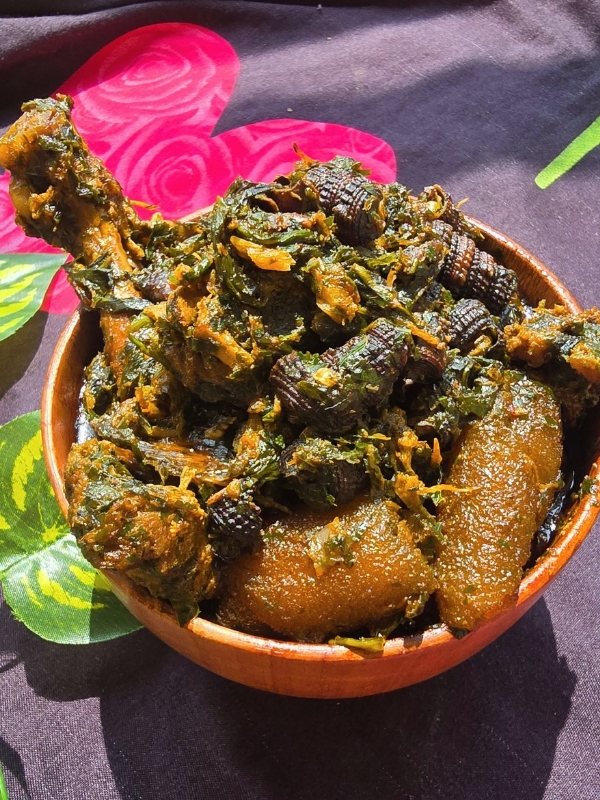
This is one soup I rate higher than the usual vegetable soup because it is so nutrient-filled and the taste of periwinkle which is one of the most important ingredients sure is yummy.
It is nutrient‑dense just like Oha Soup, full of flavor, and perfect with garri, fufu, eba, or even rice. In this post, I’ll guide you in detail so that even if you’re a beginner, you can arrive at a delicious result.
Afang Soup Recipe (Authentic Nigerian Efik Soup) (Why This Recipe Works)
-
It balances waterleaf (for moisture) with afang leaf (for the characteristic texture and flavor).
-
The inclusion of periwinkle, meat, kpomo, dried fish, and crayfish ensures rich umami and depth.
-
Palm oil gives it that glossy, hearty look and taste, while seasoning (stock cube, salt, fresh pepper) rounds the flavor.
-
Good transitions and layering of ingredients help you avoid overcooking or undercooking any component.
Let’s dive into the ingredients, then steps, tips, and serving suggestions.
Afang Soup Recipe (Authentic Nigerian Efik Soup).
Equipment
- 1 Blender for blending the afang leaves.
Ingredients
- 400 gram Waterleaf Fresh waterleaf is best. It releases a lot of moisture when cooked, which helps build the soup's consistency. Always add it before the afang leaf.
- 300 gram Afang leaves Also known as Okazi leaf. Shred or pound finely for best results. The tougher the leaf, the longer it needs to cook; but never overcook it. A slight chew is what makes authentic Afang Soup stand out.
- 1 kg Meat A mix of beef, goat meat, and shank works beautifully. Cut into medium chunks for even cooking. The more variety you use, the richer your broth becomes.
- 200 gram Kpomo Clean thoroughly before cooking. Kpomo absorbs all the flavour from the broth and adds a satisfying chewy texture to every spoonful.
- 3 whole dried fish Debone carefully before adding to the pot to avoid bones in your soup. Dried fish adds a deep smoky flavour that fresh fish simply cannot replicate.
- 300 gram Periwinkle If using periwinkle in shells, cook separately and extract the meat before adding. Shelled periwinkle saves time and works just as well.
- 1/2 cup Palm oil Use good quality, deep red palm oil for the richest colour and flavour. Use ½ cup for a lighter soup or 1 full cup for a deeply traditional finish.
- 3 tablespoons Ground crayfish 3 tablespoons Freshly pounded crayfish gives the best flavorr. Add it early so it infuses deeply into the broth rather than sitting on top.
- 2 cubes seasoning Add gradually and taste as you go. Every brand has a different salt level, so always adjust to your preference rather than adding everything at once.
- 8 whole Fresh pepper Scotch bonnet or habanero both work perfectly. Blend for even heat distribution throughout the soup or slice if you prefer a milder flavor.
- 1 tablespoon Salt to taste Always taste before adding salt; your stock cubes, dried fish, and crayfish already carry saltiness. Add sparingly and adjust at the end.
- 2.5 litres Water Use just enough to cover the meat at the start. You can always add more as the soup cooks, but too much water from the beginning will dilute your flavor.
Instructions
- Step 1: Boil the Meats, Kpomo & Dried Fish: In a large pot, place your meat, kpomo, and dried fish. Add water (enough to cover the ingredients and leave room for expansion). Add one stock cube (or part thereof) and a pinch of salt. Bring to boil, then reduce heat and simmer until meat is tender (this may take 30–45 minutes depending on meat cuts). Skim off foam or impurities as they surface.
- Step 2: Introduce the Palm Oil and Crayfish. With meat still simmering, pour in your palm oil. Stir gently to mix into the stock (you’ll see the red/orange hue forming). Add the ground crayfish at this point and stir. Let it cook for about 5–7 minutes in the stock. This step allows your crayfish flavor to infuse evenly into the broth.
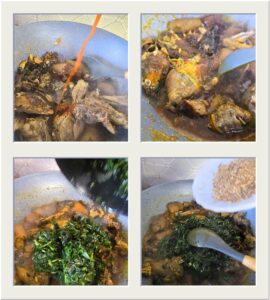
- Step 3: Add Fresh Pepper & Adjust Seasoning. Add your blended fresh pepper gradually, stirring as you go. Taste the soup and then add your remaining stock cube or salt to adjust flavor. At this point, your “broth” is nearly set—just needs its vegetables and periwinkle.
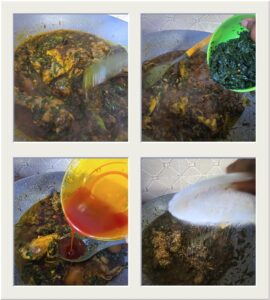
- Step 4: Fold in Waterleaf. Add the chopped waterleaf in batches. Because waterleaf releases a lot of moisture, don’t dump it all at once; give time to mix and wilt. Simmer for about 5 minutes so the waterleaf softens and melds into the soup. Waterleaf gives the soup body and a nice mild “green” flavor; its juices also contribute to the soup’s consistency.
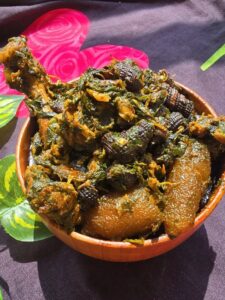
- Step 5: Incorporate the Afang Leaf (Okazi): Now add the blended or pounded afang leaf. Because afang is tougher, it needs more time to soften. Stir well to distribute evenly throughout the soup. Cover the pot and let it cook on low heat for 7–10 minutes, stirring occasionally to prevent sticking. The goal is for the afang leaf to soften just enough but still retain a slight chew; that’s part of the texture. Taste again and adjust salt or seasoning if needed.
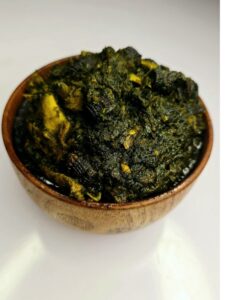
Notes
Do not overcook the afang leaf. It should retain a slight chew; that texture is what makes authentic Afang Soup stand out.
If your afang leaf is very tough, pound or blend it lightly before adding to the pot. This helps it cook faster and distribute evenly.
Skim off foam during the meat boiling stage for a cleaner, better tasting broth.
Adjust palm oil to your preference; half a cup gives a lighter soup while one full cup gives you that deeply rich, traditional finish.
Serve hot with eba, fufu, pounded yam, or semolina for the full experience.
Ingredients for Afang Soup Recipe (Authentic Nigerian Efik Soup)
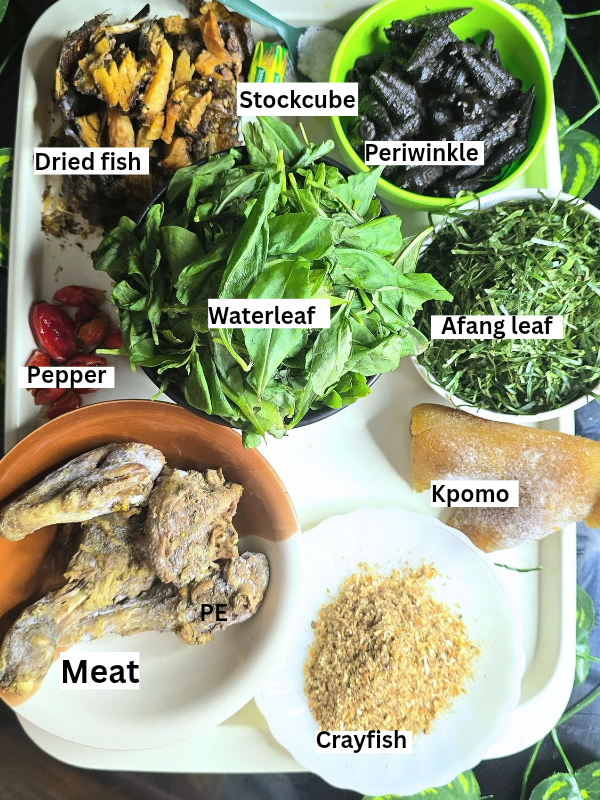
| Ingredient | Approximate Quantity* |
|---|---|
| Waterleaf | 1 large bunch (or ~400–500 g chopped) |
| Afang leaf | 2 medium bunches (or ~300 g) |
| Meat (beef, goat, assorted) | 1 kg (mixed cuts: chunks, shank, etc.) |
| Kpomo (cow skin) | ~200 g, cleaned & cut into cubes/strips |
| Dried fish | 2–3 medium whole dried fish (or equivalent in flakes) |
| Periwinkle (in shell or shelled) | 300 g (if in shells, cook and extract meat) |
| Palm oil | ½ – 1 cup (depending on how “oily” you like it) |
| Ground crayfish | 3 tablespoons |
| Stock cube | 2 cubes (or adjust to taste) |
| Fresh pepper (e.g. Scotch bonnet, habanero) | 2–3, blended or sliced |
| Salt | to taste |
| Water | as needed for cooking (around 2–3 litres) |
* Quantities are approximate; adjust based on how many people you’re feeding.
Pre‑Preparation & Tips On Afang Soup Recipe (Authentic Nigerian Efik Soup)
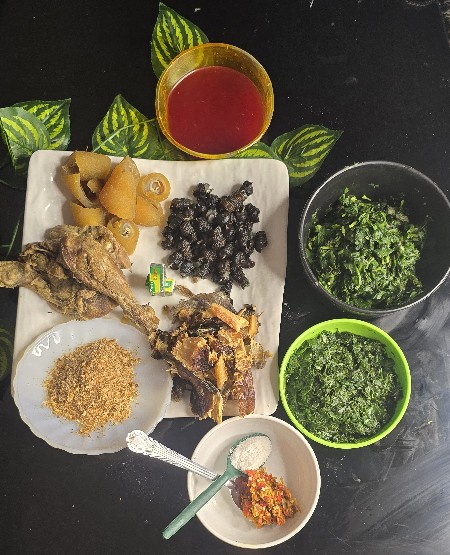
Before cooking, do the following:
-
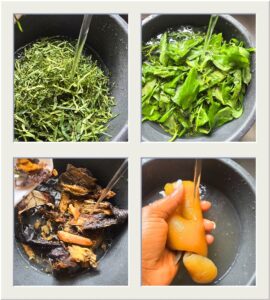
Wash and prep leaves
-
Wash the waterleaf thoroughly. Chop finely (you want small leafy bits).
-
Wash the afang (okazi) leaf. Traditionally, one slices the leaf very thinly and pound or blend to almost smooth texture. Some people blanch to soften but if it’s coarse, blanch in hot water briefly, drain, and slice.
-
-
Clean and prep meat, kpomo, dried fish
-
Wash your meat cuts, drain, and season lightly (with salt and 1 stock cube) for boiling.
-
Clean kpomo thoroughly (boil separately initially if it’s tough).
-
Rinse dried fish, remove bones or break into manageable pieces.
-
-
Handle periwinkle
-
If periwinkle is still in shells: wash well, cut the bottom tip off with a hard object. Wash again and pick out the cracked shells out
-
If they’re already shelled, wash and set aside.
-
-
Blend or crush fresh pepper
-
Use a blender or mortar & pestle to make your pepper paste. You can mix pepper with a little water or stock.
-
-
Measure crayfish, oil, and seasonings
-
Have your ground crayfish, palm oil, stock cubes, and salt ready so you add smoothly in the cooking process.
-
Cooking Steps of Nigerian Afang Soup Recipe (Authentic Nigerian Efik Soup)
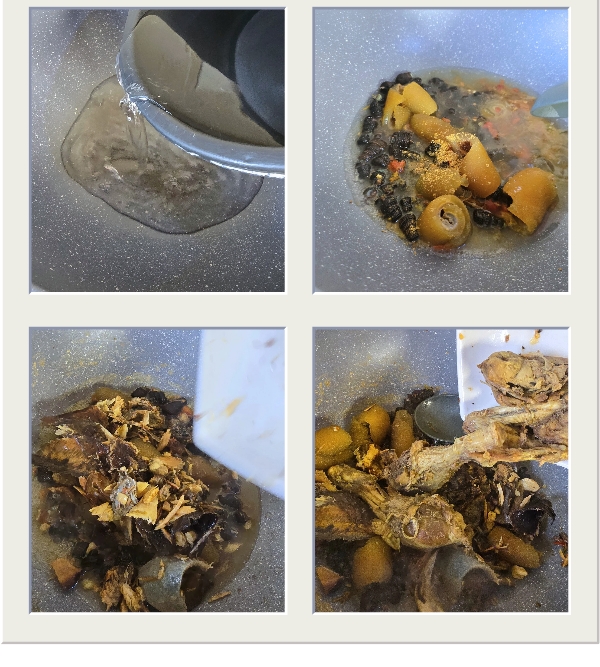
1. Boil the Meats, Kpomo & Dried Fish
-
In a large pot, place your meat, kpomo, and dried fish.
-
Add water (enough to cover the ingredients and leave room for expansion).
-
Add one stock cube (or part thereof) and a pinch of salt.
-
Bring to boil, then reduce heat and simmer until meat is tender (this may take 30–45 minutes depending on meat cuts).
-
Skim off foam or impurities as they surface.
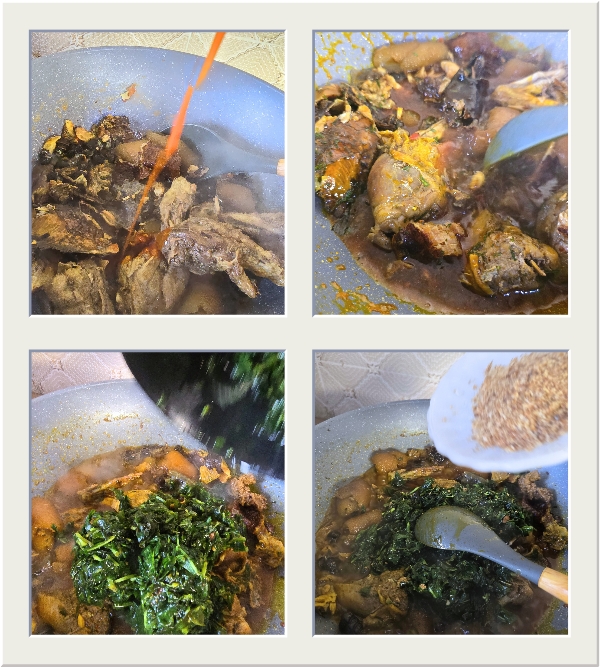
2. Introduce the Palm Oil and Crayfish
-
With meat still simmering, pour in your palm oil. Stir gently to mix into the stock (you’ll see the red/orange hue forming).
-
Add the ground crayfish at this point and stir. Let it cook for about 5–7 minutes in the stock.
This step allows your crayfish flavor to infuse evenly into the broth.
3. Add Fresh Pepper & Adjust Seasoning
-
Add your blended fresh pepper gradually, stirring as you go.
-
Taste the soup and then add your remaining stock cube or salt to adjust flavor.
-
At this point, your “broth” is nearly set—just needs its vegetables and periwinkle.
4. Fold in Waterleaf
-
Add the chopped waterleaf in batches. Because waterleaf releases a lot of moisture, don’t dump it all at once—give time to mix and wilt.
-
Simmer for about 5 minutes so the waterleaf softens and melds into the soup.
Waterleaf gives the soup body and a nice mild “green” flavor; its juices also contribute to the soup’s consistency.
5. Incorporate the Afang Leaf (Okazi)
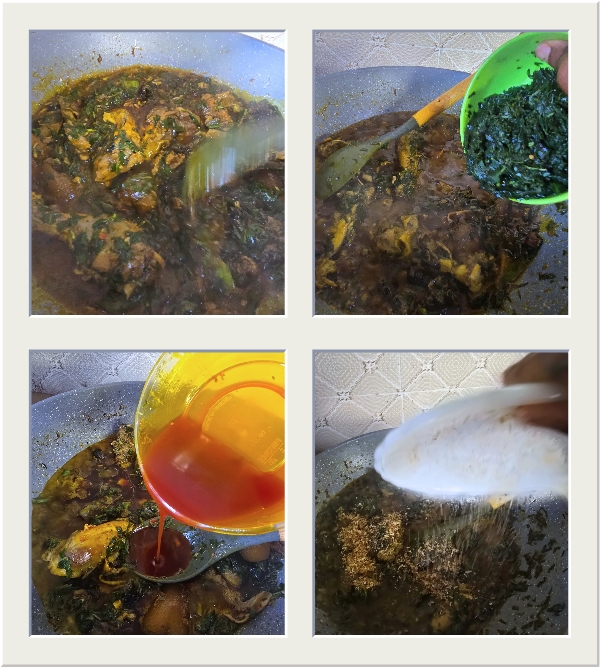
-
Now add the blended or pounded afang leaf. Because afang is tougher, it needs more time to soften.
-
Stir well to distribute evenly throughout the soup.
-
Cover the pot and let it cook on low heat for 7–10 minutes, stirring occasionally to prevent sticking.
The goal is for the afang leaf to soften just enough but still retain a slight chew—that’s part of the texture.
6. Final Adjustments & Finishing Touches
-
Taste again and adjust salt or seasoning if needed.
-
If soup is too thick, you can add a little hot water and stir.
-
If too watery, let it simmer a bit more uncovered to reduce.
-
Let it rest off heat for 2 minutes.
At this point, your Afang Soup is ready to serve.
Serving Suggestions & Tips of Afang Soup Recipe (Authentic Nigerian Efik Soup)
-
Serve hot, ideally with eba, fufu, garri, boiled plantain, or rice.
-
Pair it with starchy swallow for a complete local experience.
-
Store any leftovers in the refrigerator (in a sealed container). It can reheat well the next day (just stir occasionally while warming).
Common Mistakes & How to Avoid Them on Afang Soup Recipe
-
Overcooking the afang leaf — it can become mushy. Add it toward the end.
-
Adding all the waterleaf at once — it’ll flood the pot with liquid; add gradually.
-
Not cleaning periwinkle well — grit can spoil the texture; wash thoroughly.
-
Not skimming meat foam — it leads to murky, less appetizing broth.
-
Using too little palm oil — Afang tastes best with that rich red hue and smooth mouthfeel.
-
Imbalanced seasoning — always taste before final salt/stock cube adjustments.
Sample Recipe in One View (Summary)
-
Boil meat, kpomo, and dried fish with water, stock cube, salt until tender.
-
Add palm oil and ground crayfish; simmer 5–7 minutes.
-
Add fresh pepper; adjust seasoning.
-
Gradually fold in waterleaf; simmer until wilted (≈5 min).
-
Add periwinkle; simmer a few minutes.
-
Add afang leaf; cover and simmer 7–10 minutes.
-
Taste, adjust salt, reduce or thin consistency, rest, and serve.
Frequently Asked Questions
1. What Are the Ingredients of Afang Soup?
To begin with, making a delicious pot of Afang Soup requires the right ingredients. First and foremost, gather the following before you start cooking, as this makes the entire process much smoother:
- Afang leaves (finely shredded)
- Waterleaf
- Assorted meat (beef, tripe, cow skin)
- Periwinkle
- Palm oil
- Crayfish
- Stockfish and dry fish
- Seasoning cubes and salt
- Pepper to taste
Overall, having everything ready beforehand ensures your cooking flows seamlessly from start to finish.
2. What Are the Ingredients in Uziza Soup?
Just like Afang Soup, Uziza Soup also uses rich, flavourful ingredients. However, there are key differences worth noting. Instead of afang leaves, you will use:
- Uziza leaves
- Cocoyam (as thickener)
- Assorted meat and fish
- Palm oil
- Crayfish
- Periwinkle (optional)
- Seasoning and pepper
Notably, unlike Afang Soup, Uziza Soup relies on cocoyam to thicken the broth. As a result, it comes out heartier and thicker in texture, which makes it equally satisfying.
3. Can I Blend Afang Leaves With a Blender?
Yes, you absolutely can! Nevertheless, most experienced cooks strongly prefer to shred afang leaves finely by hand or with a knife. This is because blending makes the leaves too soft and pasty, which consequently changes the texture of your soup entirely.
Therefore, for the best results, always shred the leaves thinly so that they retain their natural bite and vibrant colour. In short, your hands or a sharp knife will always give you a better outcome than a blender.
4. What Are the 7 Steps to Making Afang Soup?
Fortunately, making Afang Soup is straightforward when you follow these steps carefully. First, read through all the steps before you begin, as preparation is everything:
- First, wash and shred your afang leaves finely
- Next, boil your assorted meat with seasoning until tender
- Then, add palm oil, crayfish, and pepper to the pot
- After that, stir in stockfish and dry fish and allow to cook
- Subsequently, add periwinkle and let everything simmer together
- Then, add waterleaf first and stir well
- Finally, add afang leaves, stir, and cook for just 3–5 minutes
Most importantly, do not overcook the leaves at the end. Otherwise, they will lose their vibrant colour and firm texture, which ultimately affects the overall taste of your soup.
5. Easy Afang Soup Recipe
If you are looking for a quick and easy Afang Soup recipe, then you are in the right place. To start with, boil your assorted meat until perfectly tender, then build your flavour base with palm oil, crayfish, pepper, and seasoning.
After that, add your stockfish, dry fish, and periwinkle, and allow everything to simmer together beautifully. Once the base is ready, stir in the waterleaf first, followed immediately by your shredded afang leaves.
Finally, cook for just 3–5 minutes and serve hot alongside eba, fufu, or pounded yam. As a result, you will have a rich, flavourful pot of Afang Soup that everyone at the table will absolutely love.
6. How to Cook Afang Soup in Akwa Ibom Style
When it comes to Afang Soup, Akwa Ibom style stands out for its bold and deeply rich flavour. To begin with, locals use a generous amount of periwinkle and palm oil, which together give the soup a deeper, more robust taste.
In addition to that, fresh bush meat or snail is often added for extra depth of flavour. Furthermore, the key difference lies in the balance of leaves; Akwa Ibom style traditionally uses more afang leaves than waterleaf, which consequently creates a thicker and more concentrated soup. Overall, if you want an authentic taste of Efik cuisine, this is undoubtedly the version to try.
7. Best Afang Soup Recipe
Without a doubt, the best Afang Soup always starts with fresh, finely shredded afang leaves. First and foremost, cook your meat until perfectly tender before adding anything else to the pot.
Furthermore, always use good quality palm oil and freshly pounded crayfish for maximum flavour. In addition, never rush the cooking process, as each ingredient needs time to release its full flavour into the pot.
Most importantly, always add the leaves last and never overcook them — otherwise you will lose both the colour and the taste. Ultimately, when you follow all these principles consistently, your Afang Soup will come out rich, flavourful, and absolutely delicious every single time.
Conclusion on Afang Soup Recipe (Authentic Nigerian Efik Soup)
Cooking Afang Soup is not just about following steps—it’s about layering flavors, respecting ingredient textures, and timing your additions carefully.
With your waterleaf, periwinkle, meat, fresh pepper, stock cube, crayfish, afang leaf, palm oil, kpomo, dried fish, and salt, you have everything you need for a hearty, authentic pot.
Once you master this base method, you can experiment by using assorted meats or seafood, adjust spice levels, or tweak the ratio of leaves to proteins. But the core principles remain the same: pre‑prep, gradual layering, correct timing, and constant tasting.
Enjoy your cooking and may your next bowl of Afang Soup be full of flavor, richness, and satisfaction!

You sure know how to teach